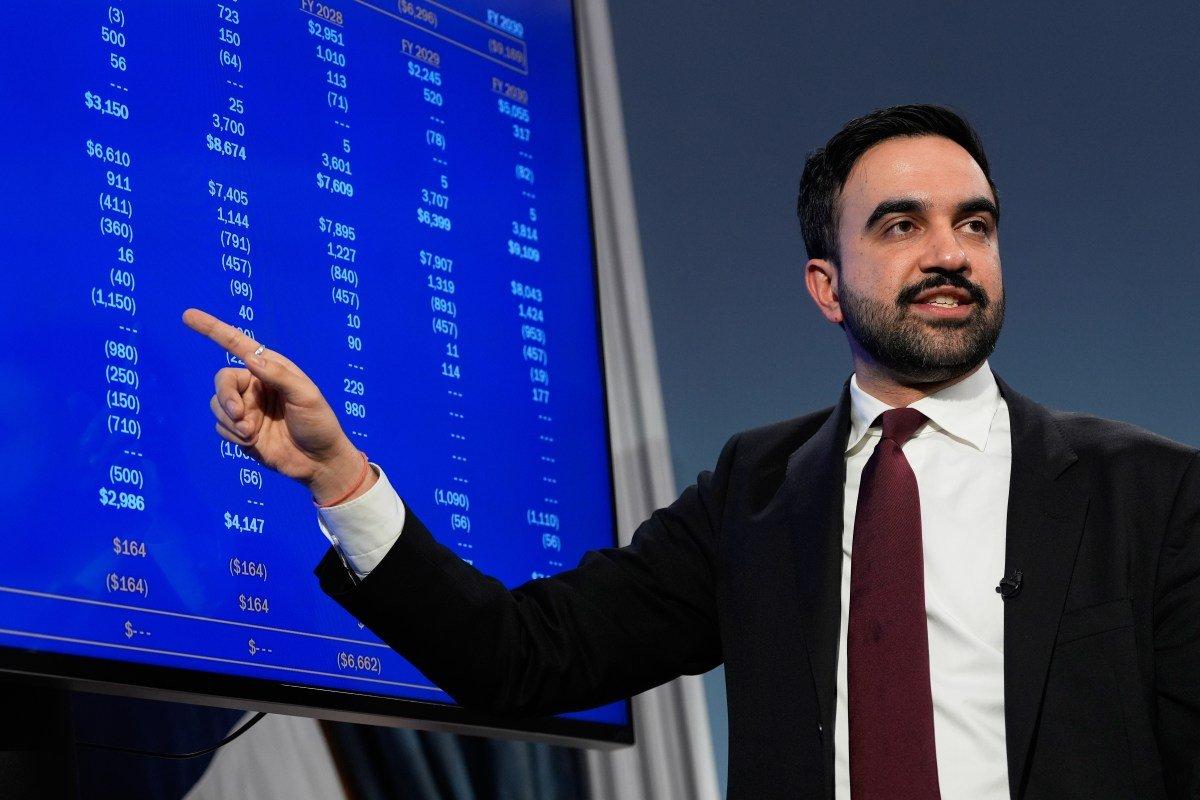
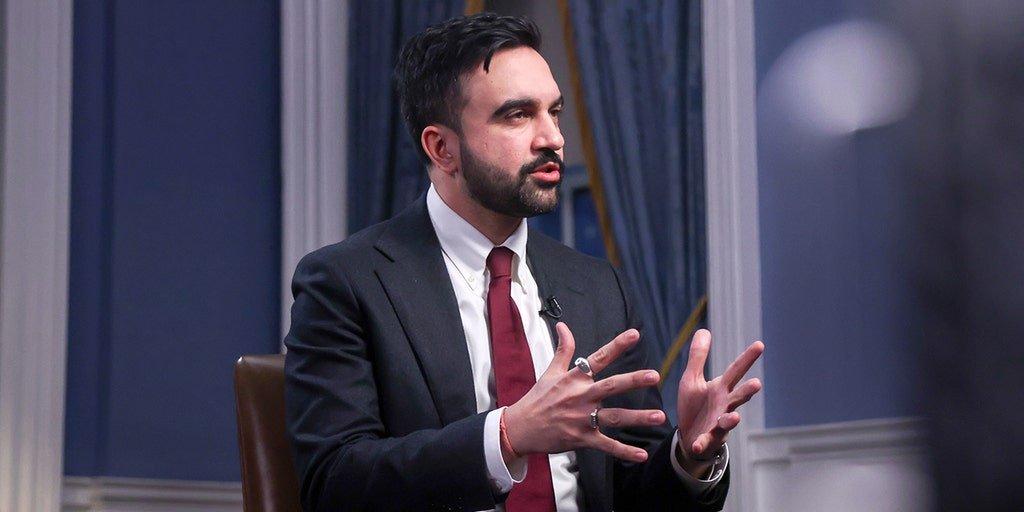
This piece is openly partisan opinion presented without that label, characterizing Mamdani's budget as 'the biggest bait-and-switch in political history' and 'blackmailing Albany.' It offers no factual context for the inherited deficit, no opposing perspectives, and concludes with an editor's note calling Mamdani's governance a 'socialist takeover.' The framing throughout treats policy disagreement as bad faith and personal failure.
Loaded LanguageNarrative FramingAppeal to EmotionSelective OmissionStraw Man
“Zohran Mamdani pulled off the biggest bait-and-switch in political history”
“He's also blackmailing Albany, saying he'll raise property taxes if Gov. Kathy Hochul doesn't allow him to raise business taxes”
This opinion piece uses consistently loaded language throughout — 'fleece,' 'extort,' 'tantrum,' 'soak' — presenting Mamdani's budget as economic predation rather than governance. It omits that the deficit is substantially inherited and that Mamdani's property tax path is explicitly his last resort, not his preference. The piece characterizes the governor's refusal to cooperate as reasonable without examining her political motivations.
Loaded LanguageSelective OmissionNarrative FramingAppeal to EmotionContext Stripping
“What an ultimatum: Fleece the rich for him, or he'll fleece them and the middle class.”
“Yet the mayor is trying to extort her by threatening to raise city property taxes by 9.5%”
The article frames the homeless policy reversal as a consequence of a 'radical left' policy causing deaths, using loaded political labels and quoting a hyperbolic councilmember characterization as representative criticism. It acknowledges the deaths are not directly linked to the policy but buries this caveat and structures the piece to maximize the implied causal connection. The 'seizing the means of communication' phrase is ideologically loaded framing applied to a routine administrative decision.
Loaded LanguageNarrative FramingContext StrippingAppeal to EmotionSelective Omission
“the socialist has changed his mind on one policy with allegedly lethal consequences”
“That lack of clarity is partly due to the Mamdani administration seizing the means of communication related to the cold deaths from the NYPD.”
The article frames the encampment reversal as Mamdani 'abandoning' a 'leftist' policy 'as homeless New Yorkers freeze to death,' implying direct causation without evidence. The headline directly connects the deaths to the policy reversal in a way the body text does not support. Curtis Sliwa is quoted as the primary expert on homeless shelter reluctance, a politically active figure whose perspective is presented without counterbalancing voices.
Loaded LanguageNarrative FramingAppeal to EmotionContext StrippingSource Selection Bias
“Mamdani Abandons Key Leftist Policy As Homeless New Yorkers Freeze To Death”
“In an early show of his leftist bona fides, New York City Mayor Zohran Mamdani ordered police and sanitation workers to stop dismantling the city's homeless encampments.”
The article aggregates two distinct stories — criticism of Mamdani over Black deputy mayor appointments and a tax policy debate — under a sensationalized headline implying a hostage scenario and mass exodus. The framing leads with politically charged language ('snubbing,' 'flee in droves') that isn't fully supported by the sourced material, which is primarily one columnist's opinion piece. The piece functions as opposition research packaging.
Loaded LanguageNarrative FramingAppeal to EmotionAnchoringSelective Omission
“Mamdani accused of snubbing Black leaders as families flee New York City in droves”
“some Black and Latino leaders are concerned that 'they are being denied access to power'”
The article leads with the deaths and frames the sweep reinstatement as 'reversing a major campaign promise,' emphasizing political failure over policy substance. It includes Rudy Giuliani's inflammatory 'communists have no regard for human life' quote without critical framing. The piece mirrors the prior administration's approach without examining whether the new method differs substantively.
Loaded LanguageAppeal to EmotionNarrative FramingSource Selection BiasContext Stripping
“Facing mounting backlash after 19 people died during a winter cold snap, New York City Mayor Zohran Mamdani is reversing a major campaign promise”
“'Communists have no regard for human life,' Giuliani said”
The article leads with City Hall 'backtracking' on lawyer hiring rationale, framing a clarification as a credibility problem. It prominently highlights the campaign-trail context of lawyers as a 'bulwark against Trump' to imply dishonesty, while the functional budget details are secondary. The unanswered $70M-to-$125M savings math is a legitimate question but is presented in a way that maximizes suspicion.
Loaded LanguageNarrative FramingContext StrippingSelective Omission
“City Hall backtracked Wednesday on the mayor's statement”
“On the campaign trail, Mamdani had said hiring 200 new lawyers were part of 'a critical bulwark' against President Trump -- and never mentioned fighting torts.”
The article reports a Democratic congressman's skepticism about Mamdani's wealth tax proposal on a conservative-leaning TV program, citing migration data and think-tank analysis. The sourcing is one-sided — only critics of the wealth tax are quoted — and the Cato Institute is the sole policy source cited without counterbalancing expert opinion. The piece is factually grounded but structurally favors the anti-tax position.
Source Selection BiasSelective OmissionNarrative Framing
“These targeted wealth taxes that we see, right, from states, whether it's California, New York, the wealthy can just leave, right? So these are not going to work”
“I think the exodus is still going on. I think it will continue.”
This detailed piece provides strong contextual background on the budget deficit's origins, including a nuanced breakdown showing 96% of new spending stems from inherited underfunded programs. This is a crucial fact omitted by most outlets. However, some framing choices — describing opposition to wealth redistribution between city and state as 'ironic' — reveal mild editorial perspective. Overall it is one of the more informative budget articles.
Selective OmissionNarrative Framing
“96 percent of this $14 billion in new spending is to cover underfunded programs implemented by Adams, not Mamdani”
“the irony here... is that Mamdani is essentially objecting to progressive taxation -- giving out less in benefits to those who contribute more in revenue -- between the city and state”
This report provides strong factual detail on the budget proposals, including specific figures, multiple stakeholder reactions, and the political context of Governor Hochul's re-election pressures. It quotes both supporters and critics, notes the preliminary nature of the budget, and contextualizes the property tax hike's potential effects. Minor framing choices — describing Mamdani as 'democratic socialist' at every mention — reflect slight editorial convention rather than strong bias.
Collective Narrative Alignment
“Mamdani's budget proposals are merely the first steps in what is likely to be a protracted dance of proposals and counter-proposals”
“The threat to raise property taxes puts pressure on Hochul, who is seeking re-election this year”
This article clearly explains the two-path structure, provides direct quotes from Mamdani and multiple stakeholders, and contextualizes the property tax situation historically. It appropriately notes fiscal watchdogs urge spending cuts as a third path the mayor has not sufficiently engaged. The piece uses 'ultimatum' in the headline, which slightly overstates the adversarial framing of what Mamdani presented as a structural constraint.
Collective Narrative AlignmentLoaded Language
“Property taxes remain New York City's largest revenue stream and the primary fiscal lever under Mamdani's direct authority”
“'It's false to think they are the only two choices,' said Andrew Rein of the CBC.”
This article provides substantial factual detail on the budget proposal, including specific tax rates, revenue projections, and property tax context. It includes criticism from a landlord group, fiscal watchdogs, and elected officials. The framing is largely neutral and acknowledges Mamdani's stated preference for the wealth tax path over property taxes. Minor issue: it describes the property tax hike as a 'fallback plan' consistent with Mamdani's own framing without scrutinizing the political leverage aspect more critically.
Collective Narrative Alignment
“His statement, together with his campaign promises of redistributing wealth in New York City, suggest that the mayor is using a pretty unpopular property tax hike as leverage”
“Significant changes to Mamdani's proposal are expected to be introduced before the City Council must adopt a balanced budget by the start of the next fiscal year on July 1.”
This report covers the budget announcement with mostly factual framing, quoting Mamdani directly, Hochul's opposition, council speaker reaction, and fiscal watchdog criticism. It briefly notes the property tax increase could 'disproportionately affect Black neighborhoods,' an important equity dimension absent from most coverage. Minor issue: the article doesn't explore the inherited deficit context in depth.
Collective Narrative AlignmentSelective Omission
“it is also believed that such an increase would disproportionately affect black neighborhoods in New York City”
“The best choice is to eliminate spending that does not improve New Yorkers' lives and make government more efficient and effective.”
This report presents the encampment sweep reversal with balanced sourcing, including both the mayor's rationale and criticism from homeless advocacy groups. It notes the absence of confirmed linkage between encampment policy and the deaths. The piece provides relevant historical context about the prior administration's approach without editorializing about the policy's merits.
Collective Narrative Alignment
“There is no evidence that anyone who died had been living in encampments, according to the mayor's office”
“David Giffen, the executive director of Coalition for the Homeless, said his organization was 'blindsided' by the announcement, which he decried as a 'political response'”
This is detailed, factually grounded reporting on the encampment sweep reversal. It includes the specific mechanics of the new policy, quotes from multiple stakeholders including legal aid attorneys and shelter operators, and accurately notes the lack of confirmed linkage between the policy pause and deaths. It is one of the few pieces to note the policy is more nuanced than a simple reversal.
“The administration has said it does not believe that any of the deceased were in touch with outreach workers immediately before they died”
“'What we're seeing right now is a retreat from campaign promises and a lack of meaningful communication,' Mr. Goldfein said.”
This analytically focused piece draws on peer-reviewed economic literature to examine the expected and unexpected consequences of property tax increases, including regressive incidence and rent pass-through effects. It presents stakeholder reactions without excessive editorializing and is the only article to ground the debate in empirical research. Framing is largely neutral and serves to inform rather than advocate.
“for every $1 increase in property taxes, landlords pass through between $0.50 and $0.89 of it to their tenants via higher rent prices”
“local property tax increases tend to be regressive, meaning that those who are not wealthy often bear a greater tax incidence”
This article provides a clear, factual account of the press conference, quoting Mamdani extensively and accurately representing his two-path framing. It notes the inherited deficit context and the reduction from $12 billion to $5.4 billion. The piece is brief and does not editorialize, though it lacks third-party reaction and fiscal expert commentary that would add completeness.
“Mamdani described the 'options of the second path' as being 'the options of last resort'”
“this would effectively be a tax on working and middle-class New Yorkers who have a median income of $122,000”
This is a straightforward feature on the first day of Ramadan and Mayor Mamdani's religious observance. It includes multiple community voices and presents the mayor's remarks without editorial characterization. No significant framing bias is detectable; it covers a genuine newsworthy moment with appropriate context.
“This is a month of reflection, it's a month of solidarity”
“It is not something that is common to have a Muslim mayor in New York City. That's something very, very, very important for us.”