Heavily editorialized framing that casts Zelenskyy as heroic figure "slamming" the Olympics. Leads with Heraskevych's emotional "emptiness" quote and emphasizes his refusal to "betray" dead athletes. Minimal explanation of IOC's institutional reasoning or Rule 50 context. Language choices ("kicked," "slammed," "tore into") consistently adversarial toward IOC.
Loaded LanguageSelective OmissionAppeal to EmotionNarrative Framing
“Zelensky tore into the Committee on social media”
“These athletes sacrificed their lives, and because of this sacrifice, I am able to be here, so I will not betray them”
Frames the story as leftist IOC capitulating to political correctness while simultaneously oppressing Ukrainian expression. Emphasizes Zelensky's strong language and Ukrainian defiance while presenting IOC as hypocritical for allowing other political statements. Selective quote selection highlights emotional elements and Ukrainian grievances while minimizing IOC's institutional reasoning.
Loaded LanguageSelective OmissionNarrative FramingSource Selection Bias
“The leftist publication New York Times (NYT) reported that both IOC President Kirsty Coventry and Heraskevych's father were 'in tears' after the meeting”
“Heraskevych said Coventry was 'kind' to him, but he felt her decision was a 'terrible mistake' that 'plays along with Russian propaganda'”
Opinion piece explicitly framing this as IOC "PR fiasco" and praising Heraskevych's "clever and precise" messaging strategy. Acknowledges IOC's institutional reasoning and Athletes' Commission role more than most outlets, but still structures narrative around IOC incompetence. Uses historical comparison to suggest IOC has improved but remains flawed. The analysis is more sophisticated but clearly sympathetic to Heraskevych.
Narrative FramingLoaded LanguageSelective Omission
“For the IOC it must have been like watching a public relations car crash from the passenger seat”
“his message was the same: he would not back down”
Frames through Zelenskyy "ripping" IOC with emphasis on Ukrainian victimhood and Russian athletes competing under neutral flags. Highlights "massive backlash" and presents IOC as tone-deaf bureaucracy. Extensive Zelenskyy quotes about Russian athletes deserving disqualification. The framing consistently sympathizes with Ukrainian position while presenting IOC as arbitrary enforcers.
Loaded LanguageNarrative FramingSelective OmissionSource Selection Bias
“Sport shouldn't mean amnesia, and the Olympic movement should help stop wars, not play into the hands of aggressors”
“They are the ones who deserve disqualification”
Emotionally charged human interest angle focusing on Ukrainian fans' tears and reactions. Opens with fan's emotional response rather than facts of decision. Extensive quotes from Heraskevych about memorialization while presenting IOC position as technocratic and cold. The "he's won the medal of our hearts" framing in headline and opening establishes clear hero-victim narrative.
Appeal to EmotionNarrative FramingSelective OmissionLoaded Language
“She brought her fists to her eyes, to indicate sobbing, before real tears fell down her cheeks”
“For Ukraine, he is already a winner”
Frames the incident as part of broader pattern of political intrusions into Olympics, emphasizing "double standard" questions in headline and opening. Leads with other athletes' political statements to establish inconsistent enforcement theme before explaining Heraskevych case. Structures narrative to suggest IOC is selectively punishing Ukraine while ignoring US and other athletes' political expressions.
Narrative FramingAnchoringFalse EquivalenceContext Stripping
“The incident has raised questions about a double standard, as other athletes have made political statements or gestures during the games without facing disciplinary action”
“raising the question among some critics about why the Ukrainian athlete was singled out”
Contextualizes within history of Olympic protest punishments, explicitly framing Heraskevych as latest in tradition of athletes "penalized for protest." The historical examples chosen (Tommie Smith/John Carlos, Afghan refugee) establish sympathetic frame for political expression at Olympics. List format emphasizes pattern of IOC suppressing athlete voice.
Narrative FramingAnchoringSource Selection Bias
“The Olympics and politics often mix and here's some competitors who were punished for it”
“follows many Olympic athletes who were penalized for protest gestures”
Frames Heraskevych as defiant hero who "refuses to compete" rather than being disqualified. Emphasizes Zelensky's praise and the Order of Freedom award while presenting IOC as enforcing arbitrary political correctness. The "wouldn't let him" framing in headline suggests IOC as oppressive force rather than rule enforcer.
Loaded LanguageNarrative FramingSelective Omission
“There are things more important than medals. I stood up for what I believe in”
“Having courage is worth more than any medal”
Brief bulletin-style reporting that emphasizes Heraskevych's appeal arguments while noting his proposed compromise (generators for Ukraine) that IOC rejected. Frames the story around "irreparable sporting harm" and presents IOC's position as "not politically motivated" in a way that suggests skepticism. Omits full context of Rule 50's origins.
Selective OmissionNarrative Framing
“arguing that his exclusion is disproportionate, unsupported by any technical or safety violation, and causes him irreparable sporting harm”
“The IOC maintained that the decision was not politically motivated”
Media-focused angle emphasizing Heraskevych's defiance and quote about medals being "worthless in comparison to people's lives." Frames IOC as issuing "direct warning" that athlete defied. The sourcing includes previous interview where Heraskevych established his principled stance. Narrative structure emphasizes athlete conviction over institutional reasoning.
Narrative FramingLoaded LanguageSelective Omission
“I will not betray these athletes”
“a medal is worthless in comparison to people's lives”
Focuses on Ukrainian athletes' unity and protest response while presenting IOC decision as rigid and regrettable. Emphasizes the solidarity demonstrations and Zelensky's pushback while giving minimal space to IOC's reasoning. The framing choice to lead with protest rather than disqualification itself shapes reader sympathy.
Narrative FramingSelective OmissionSource Selection Bias
“This is the price of our dignity”
“The IOC said its decision to ban Heraskevych came 'with regret'”
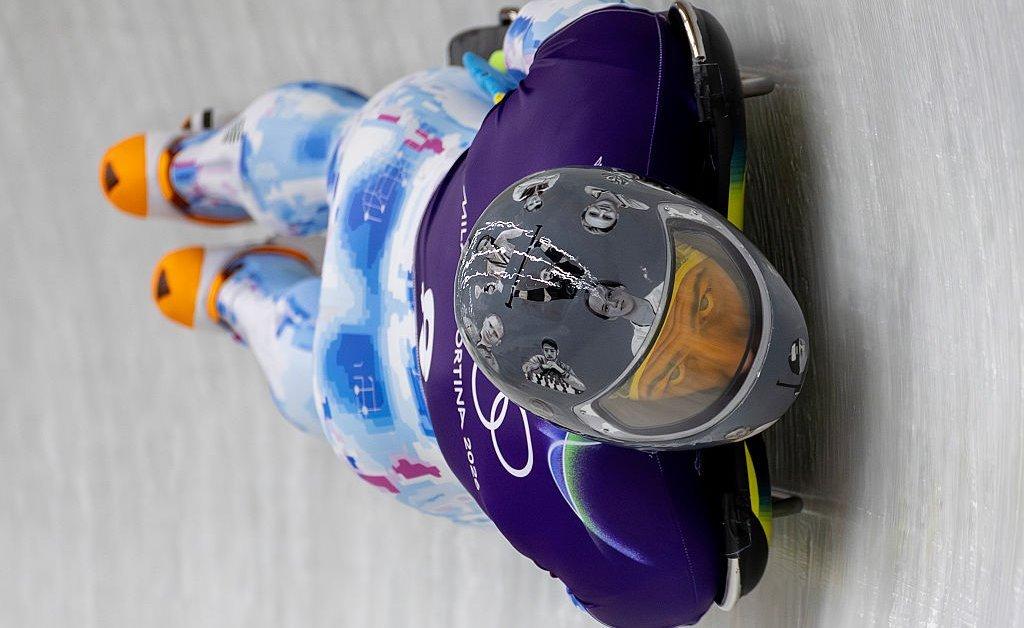
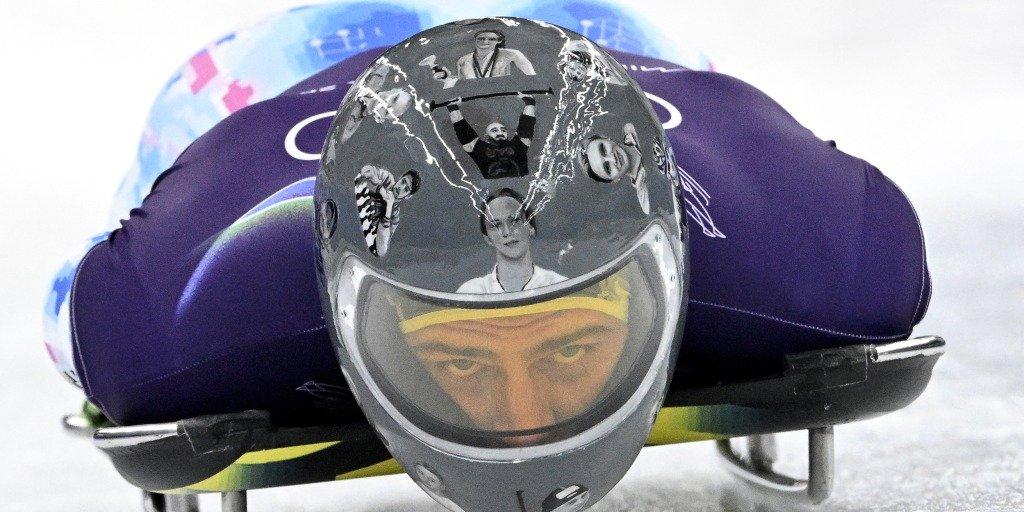
Photo essay format emphasizes visual emotional impact of memorial helmet while presenting Heraskevych's disagreement with IOC ruling. The framing choice — making the helmet the centerpiece — inherently elevates the memorial aspect over governance questions. Text is minimal but language choice ("barred," "tribute") tilts sympathetic to Heraskevych.
Appeal to EmotionSelective Omission
“Heraskevych, who had worn the helmet during training sessions, disagreed with the Committee, denying that he had violated any rules”
Political publication frames through US government lens with Zelenskyy "ripping" IOC. Emphasizes Ukrainian official criticism and Russian athlete participation under neutral flags. Includes Zelenskyy's full arguments about Russian athletes deserving disqualification. Political framing rather than sports focus shapes the narrative toward geopolitical dimensions.
Loaded LanguageNarrative FramingSource Selection Bias
“Sport shouldn't mean amnesia, and the Olympic movement should help stop wars, not play into the hands of aggressors”
“They are the ones who deserve disqualification”
Brief factual report on the disqualification with minimal editorializing. Presents basic facts of what happened without extensive analysis of either side's position. The brevity means less opportunity for spin but also less context. Neutral presentation of events without clear advocacy.
Selective Omission
Straightforward reporting on the appeal with extensive direct quotes from both sides. Presents Heraskevych's arguments about discrimination and Russian propaganda alongside Coventry's explanation of rules. Relatively balanced in giving space to both perspectives, though headline emphasizes the disqualification over the underlying policy debate.
Narrative Framing
“I believe it's totally wrong to do this decision today. Especially when we had already on these Olympic Games other cases”
“We're not making a judgement on whether the message is political or not political”
Explainer format on Olympic political speech restrictions provides useful context missing from most coverage. Explains Rule 50 history and rationale while still framing Heraskevych sympathetically. The educational approach offers more institutional context than typical coverage while maintaining slight tilt toward athlete's perspective through language choices.
Selective Omission
Comprehensive wire-style reporting with extensive quotes from multiple sides. Includes Ukrainian athletes' tears and Heraskevych's father's reaction alongside IOC spokesperson defense. Historical context of 1968 Mexico City protests included. More balanced than typical OANN coverage, possibly because largely based on wire copy. Later clarifies IOC allowed credential retention.
“They were killed, but their voice is so loud that the IOC is afraid of them”
“If we allow one athlete this expression... it will lead to chaos”
Balanced reporting that includes Coventry's tears and emotional response alongside procedural details. Presents both Ukrainian artist's perspective and IOC's explanation with relatively equal weight. Includes context about 2022 Beijing incident where IOC sided with Heraskevych. Generally neutral framing with comprehensive coverage of multiple angles.
Appeal to Emotion
“I was not meant to be here but I thought it was really important to come here and talk to him face to face”
“We want him to compete. We really, really want him to have his moment”
Video-focused report on Coventry's tearful explanation of the decision. Presents IOC president's emotional response and rationale. The format emphasizes the human difficulty of the decision while still explaining the institutional position. Balanced presentation of a emotionally charged moment without heavy editorializing.
Appeal to Emotion
Relatively straightforward reporting focused on facts of the disqualification and Ukrainian team's solidarity response. Presents both IOC's institutional position and Ukrainian objections without heavy editorializing. Emphasizes the team protest angle and Zelensky's criticism while maintaining reportorial distance from the controversy.
Narrative Framing
“The IOC said officials held discussions with Heraskevych, including an in-person meeting with IOC President Kirsty Coventry on the morning of the decision, in an effort to reach a compromise”
“Sport shouldn't mean amnesia, and the Olympic movement should help stop wars, not play into the hands of aggressors”
Straightforward reporting on the disqualification with context about the helmet's contents and IOC's offered compromises. Includes Heraskevych's previous Beijing Olympics protest. Neutral language and balanced presentation of both sides' positions. Typical USA Today accessible news style without heavy advocacy.
“It's hard to say or put into words. It's emptiness”
“This is price of our dignity”
AP wire story with balanced presentation of facts. Includes Coventry's emotional response and explanation alongside Heraskevych's disagreement. Covers compromise attempts and both sides' reasoning. Neutral language and comprehensive coverage without advocacy. Standard wire service approach maintains objectivity.
“We didn't find common ground in this regard”
“No one, no one -- especially me -- is disagreeing with the messaging”
Balanced international perspective that presents both Zelenskyy's criticism and IOC's explanation with equal weight. Includes Ukrainian sports minister's pragmatic statement about continuing competition despite disagreement. Avoids heavy emotional framing while still conveying the controversy. Relatively neutral language throughout.
“no one was disagreeing with the helmet's 'powerful message' of remembrance and memory”
“it was an unjust decision, but said there was no question of his team pulling out of the Olympics”
International wire service reporting with neutral presentation of facts. Includes Coventry's emotional response and Heraskevych's perspective. Focuses on inability to find compromise and CAS appeal. Clean separation of facts from interpretation with balanced sourcing. No obvious regional bias despite Chinese ownership.
“They were killed, but their voice is so loud that the IOC is afraid of them”
“No one, especially me, is disagreeing with the messaging”
Tight bullet-point format presents key facts without extensive narrative framing. Includes both Coventry's disappointed statement and Heraskevych's belief about Russian propaganda. The brevity and structure prioritize information delivery over storytelling. Minimal editorializing in characteristic Axios style.
“Sadly, we've not been able to come to that solution. I really wanted to see him race today”
“I believe that this situation also plays along with Russian propaganda”
Straightforward factual reporting on the appeal filing and timeline. Focuses on procedural elements — the CAS appeal, the compressed timeline, Heraskevych's arguments. Includes both sides' positions without heavy editorializing. The procedural focus and neutral language keep this close to straight news reporting.
“Mr. Heraskevych argues that the exclusion is disproportionate, unsupported by any technical or safety violation and causes irreparable sporting harm to him”
“It's not about the messaging. It's literally about the rules and the regulations”
Network news style reporting with focus on facts and timeline. Presents IOC's statement and Heraskevych's response with equal weight. Includes Rule 50.2 text for context. Notes athlete was "considered a legitimate medal contender" without overplaying that angle. Balanced coverage appropriate for broadcast news format.
“It's hard to say or put into words. It's emptiness”
“The IOC was very keen for Mr Heraskevych to compete”
Wire service style reporting with minimal editorializing. Presents chronology of events, includes Heraskevych's social media statements and Zelenskyy's response. Neutral language throughout with clear attribution of all claims. Explains IOC rules without advocacy. Standard wire service approach prioritizing facts over narrative.
“This is the price of our dignity”
“Having courage is worth more than any medal”
Straightforward business-paper reporting focused on facts and institutional positions. Includes historical context of Rule 50 and past Olympic protest cases. Presents both sides' arguments without heavy framing. Neutral language and structure. Typical WSJ approach of comprehensive factual coverage without editorial overlay in news section.
“It's hard to put into words. I do not get my moment at this Olympics”
“Sport shouldn't mean amnesia, and the Olympic movement should help stop wars, not play into the hands of aggressors”
Separate story on related incident involving another Ukrainian athlete's helmet message. Straightforward reporting on Handei being told to tape over inspirational quote. Includes athlete's perspective that it's not propaganda alongside IOC enforcement. Clean separation of facts from interpretation. Wire service neutrality maintained.
“They saw my sentence and they said to me, 'Sorry but it's war propaganda'”
“It's not propaganda, it's not”
Collection of reactions from various stakeholders presented without editorial framing. Includes IOC president, Zelenskyy, Heraskevych, British skeleton champion, EU ambassador, and others. The compilation format allows readers to see multiple perspectives without imposed narrative. Clean presentation of attributed statements.
“No one, no one -- especially me -- is disagreeing with the messaging”
“The IOC has banned not the Ukrainian athlete, but its own reputation”