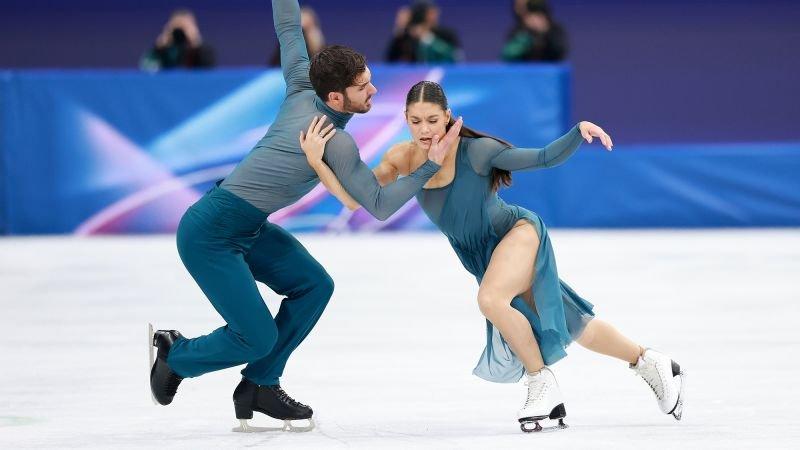
Daily Caller opens with fans "screaming 'RIGGED'" and describes a "scandal" throughout, presenting allegations as fact. The article emphasizes the French pair as "scandalous" due to their personal backgrounds and describes the judging as "snatched away the gold medal" from Americans. The piece makes definitive claims about bias ("seemingly bias in favor of France") based on limited statistical context and without examining normal judging variance.
Loaded LanguageAppeal to EmotionNarrative FramingSelective OmissionAnchoring
“"Olympics Scandal Has Fans Screaming 'Rigged'"”
“"The scoring from Dabouis has been placed under a magnifying glass in the last 24 hours following the scandalous French pair"”
The Sun presents the story as established "rigging" from the headline onward, stating the judge "has been accused of 'rigging' the figure skating to secure gold" as if the accusation itself confirms wrongdoing. The article uses emotionally charged language throughout ("heartbroken," "dramatically denied," "arouses some curiosity") and structures the scoring breakdown to maximize appearance of impropriety without examining whether the variation falls within normal bounds.
Loaded LanguageNarrative FramingAppeal to EmotionSelective OmissionAnchoring
“"A FRENCH judge has been accused of 'rigging' the figure skating"”
“"What arouses some curiosity is how the other judges scored the US duo"”
Daily Mail uses inflammatory language throughout, calling it a "'rigging' scandal" in the headline and describing "fury" erupting from fans. The article emphasizes the ISU "risked the wrath of fans" by defending the judge, framing the governing body as defiant rather than explaining their position. The piece presents Dabouis's previous scoring patterns as evidence of bias without examining whether they fall within normal judging variance.
Loaded LanguageAppeal to EmotionSelective OmissionNarrative Framing
“"Winter Olympics 'rigging' scandal boils over"”
“"Fury has since erupted from fans"”
The Telegraph's headline declares a "French judging scandal" as established fact rather than alleged controversy. The article was truncated but the framing in what's visible presents the Americans as "controversially denied gold" and emphasizes the French judge was "accused of heavily favouring her fellow countrymen," using language that assumes wrongdoing occurred.
Loaded LanguageNarrative FramingAnchoring
“"A voting controversy has rocked the Winter Olympics"”
“"accused of heavily favouring her fellow countrymen which led to an American ice-dance pair being controversially denied gold"”
Fox News frames this as American athletes being "denied" gold through "cheating" by opening with former U.S. gymnast MyKayla Skinner saying she's "sick" of "judges cheating." The article emphasizes American victimhood and presents the judging as illegitimate without examining whether the scores fell within normal variance. The headline declares athletes "speak out against judges" rather than describing the controversy neutrally.
Loaded LanguageAppeal to EmotionSource Selection BiasAnchoring
“"I'm sick of athletes not getting what they worked so hard for and judges cheating"”
“"There has been corruption in Olympic level judged sports forever"”
The New York Post frames the story as a "judging scandal" in the headline and emphasizes obstacles to "drastic action," suggesting the Americans were wronged but face systemic barriers to justice. The article highlights that "without the French judge's lopsided scoring, Chock and Bates would have won gold," presenting this counterfactual as significant while acknowledging the ISU's defense.
Loaded LanguageNarrative FramingSelective Omission
“"controversial scoring decision"”
“"Without the French judge's lopsided scoring, Chock and Bates would have won the gold"”
USA Today frames the story through former skater Surya Bonaly's criticism that scoring "has to be changed," giving prominent platform to voices declaring the judging flawed. The article draws parallels to Bonaly's own experiences of allegedly biased judging, creating a historical pattern narrative. Bonaly's statement "I saw two mistakes" from the French team is presented as authoritative assessment, though she's not an official judge.
Source Selection BiasAppeal to EmotionNarrative Framing
“"I'm sick and tired of seeing some people who should have won miss it and just lose"”
“"something has to be changed"”
CBS emphasizes that Chock and Bates "thought they secured gold" and notes the French team had "visible mistakes," creating contrast between American perception of victory and the actual result. The article is brief but the framing subtly suggests the Americans should have won by describing their performance as "absolute best" while noting French errors.
Context StrippingLoaded Language
“"delivered their 'absolute best performance'"”
“"The French team narrowly won gold despite visible mistakes"”
CNN provides balanced reporting but with strategic emphasis on controversy elements. The article includes extensive background on both teams' personal controversies (assault allegations, abuse allegations) that contextualizes why this matchup was contentious, but this context also frames the French team negatively. The piece quotes an Italian skater saying the Americans "would have deserved to win," adding external validation to the controversy.
Narrative FramingSource Selection BiasContext Stripping
“"There were some who viewed their victory as unbelievable"”
“"in my opinion, they didn't skate so well. So I think Madison and Evan would have deserved to win"”
The Wall Street Journal provides detailed context about both teams' backgrounds and examines the controversy through the lens of figure skating's history of judging disputes. The article notes Chock and Bates "weren't ruling out a challenge" and describes visible French errors, but also acknowledges the inherent subjectivity of the sport. The framing question in the headline presumes wrongdoing by asking if judging "cost" the Americans gold.
Loaded LanguageNarrative Framing
“"Despite skating together for less than a year, the French duo... made visible errors"”
“"Unlike memorable judging furors from the 1990s and 2000s, this time there was social media for angry fans to dissect videos"”
Newsweek frames the story through French media's celebratory coverage, creating implicit contrast with American disappointment. The piece emphasizes that French reporting "did not mention Chock and Bates" and quotes their coach's shock at victory, subtly suggesting the French themselves didn't expect to win. However, it presents both perspectives and includes defenses of the judging.
Narrative FramingSource Selection Bias
“"Throughout their free program, Guillaume Cizeron and Laurence Fournier Beaudry seemed to fly on the ice"”
“"There has been much scrutiny in the aftermath of the competition on the French judge who gave Fournier Beaudry and Cizeron eight points more than he gave the Americans"”
The Epoch Times article is extremely brief, essentially summarizing that fans launched a petition questioning the result. The truncated nature makes full analysis difficult, but what's present is factual reporting without inflammatory language, simply noting the "outpouring of support from fans questioning the judging."
“"outpouring of support from fans questioning the judging that denied them gold"”
Reuters provides straightforward reporting focused on the petition and the Americans' response. The article avoids inflammatory language and presents the controversy as a matter of public debate rather than established wrongdoing. It includes substantial quotes from Chock and Bates about their experience and perspective on judging transparency without assuming the result was incorrect.
“"We felt like we delivered our absolute best performance that we could have. It was our Olympic moment"”
“"Anytime the public is confused by results, it does a disservice to our sport"”
The Guardian provides straightforward reporting of the controversy with context about the ISU's defense and the Americans' response. The article quotes directly from official statements and avoids inflammatory language, presenting the dispute as a legitimate debate about subjective judging rather than assumed misconduct. It includes the full scoring context and mechanisms for appeal.
“"It is normal for there to be a range of scores given by different judges in any panel and a number of mechanisms are used to mitigate these variations"”
“"Any time the public is confused by results, it does a disservice to our sport"”