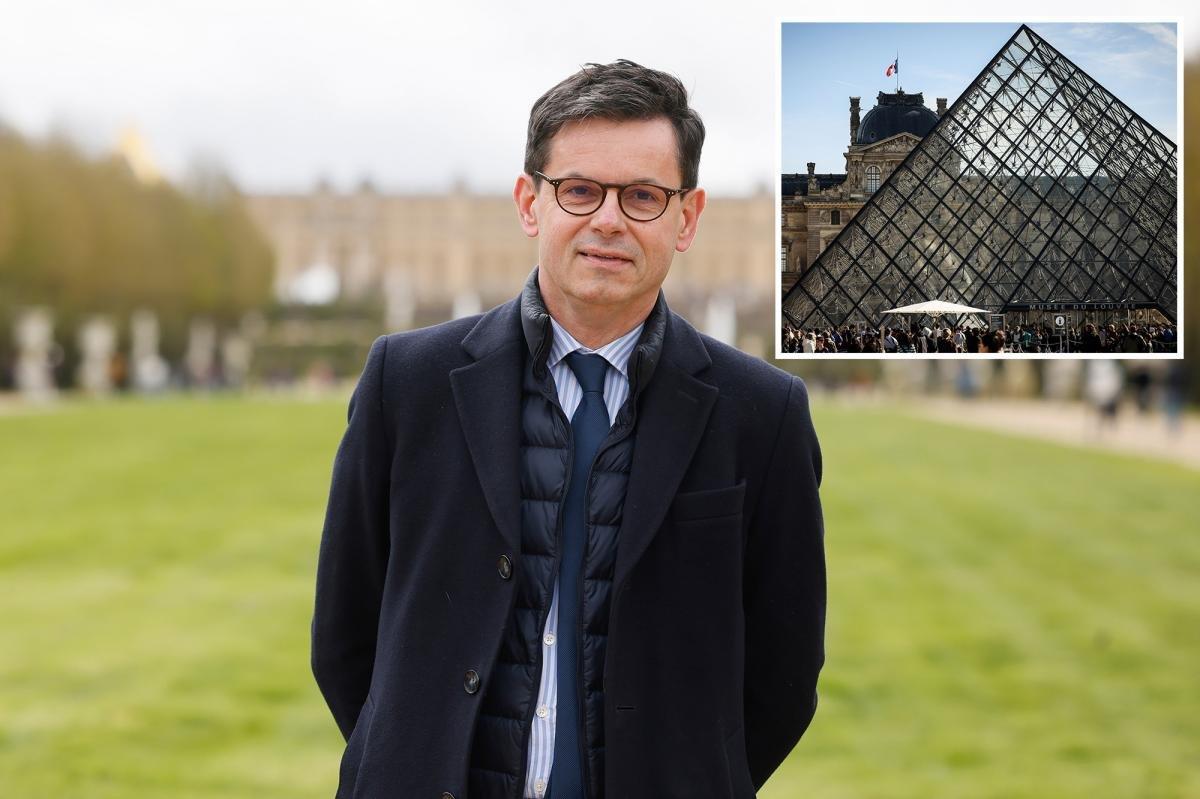
On February 25, 2026, French President Emmanuel Macron appointed Christophe Leribault, 62, as the new director of the Louvre Museum. Leribault, an 18th-century art historian who has led major French museums including the Mus
in00e9e d'Orsay and most recently Versailles Palace, will replace Laurence des Cars, who resigned Tuesday after three years in the position.
Des Cars' resignation followed sustained pressure from multiple institutional failures. In October, thieves used a truck-mounted lift to enter through a second-floor window and stole crown jewels valued at $88-102 million (including items owned by Napoleon Bonaparte) in under eight minutes. The theft exposed significant security gaps, including inadequate camera coverage of exterior walls. Des Cars had offered to resign immediately after the heist, but it was initially refused.
Beyond the heist, the Louvre has faced staff walkouts over overcrowding and understaffing, water leaks damaging collections, a burst pipe near the Mona Lisa, and the recent revelation of a suspected decade-long ticket fraud scheme that may have cost $11.8 million. A state auditors' report found the museum had fallen "considerably behind" on security and infrastructure upgrades, noting that only 39% of rooms had CCTV cameras as of 2024. The report also criticized the museum for prioritizing acquisitions over maintenance, spending $167 million on 2,754 new items (one-fourth displayed) while allocating only half that amount to building restoration.
Leribault's mandate includes strengthening security, modernizing infrastructure, restoring staff confidence, and continuing the "Louvre New Renaissance" project
inmdash a $1.1-1.35 billion renovation plan championed by Macron that includes a new entrance, underground spaces, and a dedicated Mona Lisa room with timed access. The project is expected to take up to a decade.