Ideologically driven analysis arguing the ruling "exposes" liberal justices' desire to expand executive power. Frames the decision entirely through partisan lens, characterizing liberal justices as opposing Trump rather than applying legal doctrine. Misrepresents the liberals' position on major questions doctrine as proof of pro-executive bias rather than a legitimate interpretive disagreement.
Loaded LanguageNarrative FramingStraw ManSelective Omission
“While they voted to block Trump's signature economic initiative... they declined to join the majority in full”
“If they were to accept that Congress must explicitly and clearly state the authority it intends to delegate to the executive, they would face difficulty defending expansive assertions of executive power”
Highly editorialized framing presenting Trump as "spiraling" and delivering "wild" threats. Describes his posts as a "rampage" while he "raged." Emphasizes emotional instability and vulnerability of Republicans rather than policy substance. Uses loaded characterizations throughout while presenting facts accurately underneath the spin.
Loaded LanguageAppeal to EmotionNarrative Framing
“President Donald Trump lashed out at countries with a threat of much higher tariffs”
“The president's Truth Social threat was one in a posting rampage as he raged over the country's highest court delivering a stinging blow”
Frames story around administration's "contradictory" positions, emphasizing inconsistency and potential legal weakness. Detailed examination of government's shifting rationale is valuable reporting but presented in accusatory tone. The characterization of position as "contradicting" rather than "evolving" or "adapting" reflects editorial judgment about credibility.
Loaded LanguageNarrative FramingContext Stripping
“The official rationale for this use of Section 122 contradicts the position that the government's lawyers took while litigating Trump's interpretation of IEEPA”
“Section 122 'cannot be read to narrow the President's IEEPA authority,' they said”
Commentary piece arguing Trump is "wrong" to criticize dissenting justices. Emphasizes Trump's anger through loaded descriptions ("barely controlled fury," "dripping with disdain"). Questions whether justices are being "disloyal" to legal process or to Trump personally. Includes conservative editorial board criticism of Trump to strengthen argument. Clear editorial perspective against Trump's response.
Loaded LanguageAppeal to EmotionNarrative Framing
“I've almost never seen Donald Trump as angry as he was after the Supreme Court struck down his tariffs as illegal”
“Gorsuch and Barrett did exactly what we say we want judges to do - consider the evidence and use their best judgment in interpreting the Constitution”
Frames story through Democratic opposition lens, emphasizing that they will block tariff extension. Uses phrase "Trump's economic carnage" in Schumer quote prominently. Characterizes Supreme Court outcome as "bruising defeat" and describes challenges Trump now faces. Factually accurate but emphasis on obstacles and opposition reveals slight lean.
Narrative FramingLoaded Language
“Democrats will not go along with furthering Trump's economic carnage”
“Congressional Democrats say they won't let President Donald Trump's new 15% global tariffs last longer than 150 days, creating another roadblock for the White House in the wake of a bruising Supreme Court defeat”
Literary/analytical style framing Trump's response as finding it "ridiculous" he can't unilaterally impose tariffs. Uses Trump's own quote about destroying countries sarcastically. Emphasizes the court struck down "legal laziness, recklessness" rather than tariffs per se. Sophisticated analysis but with clear editorial perspective criticizing Trump's view of executive power.
Loaded LanguageNarrative Framing
“As President, he had the right 'to destroy foreign countries,' Trump said. 'But not the right to charge a fee -- how crazy is that?'”
“It wasn't so much tariffs, per se, that the Court refused to endorse on Friday as it was legal laziness, recklessness, and a Trumpian sense that the White House is a kind of executive-power magic shop”
Emphasizes Trump "ramping up" threats and quotes describing his actions as "erratic." Includes polling showing tariffs are unpopular and economic warnings prominently. Uses loaded phrase "presidential meltdown" implicitly through expert quotes about uncertainty. Provides factual reporting but with selective emphasis on negative economic consequences.
Loaded LanguageSelective OmissionSource Selection Bias
“Trump's tariffs are overwhelmingly unpopular. A new Washington Post-ABC News-Ipsos poll found that 64 percent of Americans disapprove”
“It's impossible to plan... Not having that stable framework is hurtful for activity, hiring, investment”
Conservative commentator criticizing Trump's response to Supreme Court ruling as "unmitigated disgrace." While critical of Trump, the criticism comes from a rule-of-law conservative perspective defending judicial independence. Characterizes Trump's attacks as potentially inciting harassment. Notably, criticism from the right is substantive rather than partisan.
Loaded LanguageAppeal to Emotion
“President Trump's attacks on the Supreme Court are an unmitigated disgrace”
“Is the plan to ignite a riot on the Supreme Court steps this time, while he can still pardon the rabble-rousers as he did the Capitol rioters?”
Conservative commentary defending Supreme Court while criticizing Trump's response as "not normal." Acknowledges Trump's pattern of attacking those who disagree while suggesting his exercise of powers was "ludicrously capricious." Criticism comes from institutionalist conservative perspective defending rule of law rather than partisan opposition.
Narrative Framing
“Any other president accusing two-thirds of the Supreme Court... of being influenced by foreign interests would be a bombshell accusation”
“Trump destroyed whatever legitimate argument his administration had by exercising his powers in ludicrously capricious ways”
Emphasizes Trump "threatening" and "seething," focusing on his emotional response. Characterizes the ruling as a "major rebuke" and describes his posts as a "posting rampage." Factually accurate but word choices emphasize confrontation and anger rather than policy substance. Includes economic impact data to strengthen critique.
Loaded LanguageAppeal to Emotion
“The president made it clear in a series of social media posts that he is still seething after the Supreme Court invalidated tariffs”
“The Tax Foundation estimated the president's tariff amounted to a $1,000 tax on U.S. households last year”
Frames story as EU "hitting the brakes" with emphasis on "latest fallout" from court ruling and Trump's actions. Describes Trump's tariff approach as creating chaos. Includes relevant context about deal terms but narrative structure emphasizes disruption and uncertainty caused by US actions.
Narrative FramingLoaded Language
“Following an emergency meeting in Brussels, lawmakers said the United States' side of the deal is now 'so uncertain'”
“Trump's tariff approach has stumbled since last summer... expanding its metals tariff to hundreds of additional products last year”
Emphasizes "chaos" in headline and opening, framing the situation as creating winners and losers. Describes deals as "thrown into doubt." While providing factual analysis of different countries' positions, the narrative structure emphasizes disruption and uncertainty as the dominant theme.
Loaded LanguageNarrative Framing
“The US Supreme Court ruling canceling President Donald Trump's 'Liberation Day' tariffs has thrown trade deals into doubt and heaped uncertainty on global business”
Brief article emphasizing Trump's "warning" and "threat" language. Uses lowercase "supreme court" from Trump's post, which is itself editorial commentary on the court. Minimal context provided beyond Trump's threatening statement. The framing emphasizes confrontation.
Loaded LanguageContext Stripping
“President Donald Trump issued a warning to 'any country' that tried to use the Supreme Court's recent decision to buck his tariffs”
“Earlier Monday, Trump vowed to use lower case when referring to the court because of a lack of 'respect'”
Frames the story as Trump "racing" to rebuild his tariff policy, emphasizing his agency and determination. The headline "Plan B" suggests strategic thinking rather than reactive scrambling. Includes Trump's threatening quotes prominently without much critical context.
Narrative FramingSource Selection Bias
“President Trump is rushing to rebuild his tariff wall after the Supreme Court struck down a pillar of his trade agenda”
“Trump still has plenty of power to impose new tariffs to replace the old”
Legal/policy-focused analysis emphasizing that Trump is "already pursuing a new path" and that a "long road likely remains." Generally balanced examination of refund questions and Section 122 limitations. Includes Trump's criticism of the court but also substantive legal analysis. Slight emphasis on administrative options rather than constraints.
“Though the president can impose tariffs under other statutes, the Supreme Court held 6-3 that he cannot do so under the International Emergency Economic Powers Act”
“Refunds of billions of dollars would have significant consequences for the U.S. Treasury”
Straightforward reporting with slight emphasis on Trump's determination and trading partners' responses. Uses neutral descriptive language for most content. Includes both Trump's warnings and international confusion without heavy editorializing. The word "vows" in headline suggests resolve rather than desperation.
“Mr. Trump said Monday he had no plans to consult Congress on new tariffs, and threatened even higher levies on countries that 'play games'”
“Pure tariff chaos from the US administration. No one can make sense of it anymore”
Focuses on Oregon's potential refund rather than broader implications, emphasizing uncertainty and "chaos." Uses quote from Democratic state official criticizing Trump prominently. The framing of tariffs as something Oregon could "reclaim" rather than duties paid by importers is economically imprecise.
Selective OmissionNarrative Framing
“The President may be an incredibly powerful person, but he does not get to unilaterally sit in his office and raise taxes hidden as tariffs on all Americans”
Financial/market-focused reporting emphasizing economic uncertainty and market reaction. Uses Trump's own loaded language ("ripping the U.S.") in quote without additional context. Includes EU response and Trump's threatening rhetoric. The tangent about PayPal and Eli Lilly provides useful market context.
Selective Omission
“Trump appeared to criticize the bloc's move, writing on Truth Social that 'Any Country that wants to "play games" with the ridiculous supreme court decision' would 'be met with a much higher Tariff'”
“The Supreme Court ruled last week that Trump's sweeping 'Liberation Day' tariffs were unlawful”
Frames Trump as issuing warnings to countries attempting to "exploit" the ruling, implying their actions are opportunistic rather than reasonable responses to legal uncertainty. Generally balanced reporting with quotes from multiple parties, but headline and opening framing slightly favor administration's perspective that deals should remain binding.
Loaded Language
“Any Country that wants to 'play games' with the ridiculous supreme court decision... will be met with a much higher Tariff, and worse”
“The administration has yet to initiate new Section 301 or Section 232 investigations that would be required to impose longer-lasting tariffs”
Balanced reporting on China's response emphasizing Beijing's position that "there are no winners in a trade war." Provides context on Supreme Court ruling and Trump's response. Includes Chinese government criticism but in context of official statement rather than editorial framing. Generally neutral presentation of competing positions.
“China has consistently opposed all forms of unilateral tariff-hiking measures and has repeatedly emphasized that there are no winners in a trade war”
“The facts have shown time and again that the U.S. and China benefit from cooperation and are damaged by confrontation”
Legal analysis article characterizing the decision as "rightly" rejecting Trump's interpretation. Frames ruling as important for "rejection of a sweeping executive power grab." While critical of Trump's position, the analysis is grounded in constitutional interpretation rather than partisan opposition. Raises unresolved questions about emergency powers broadly.
“In a 6-3 decision, the court rightly held that IEEPA does not give the president the power to impose tariffs”
“The decision is important for its impact on tariffs, and as a rejection of a sweeping executive power grab”
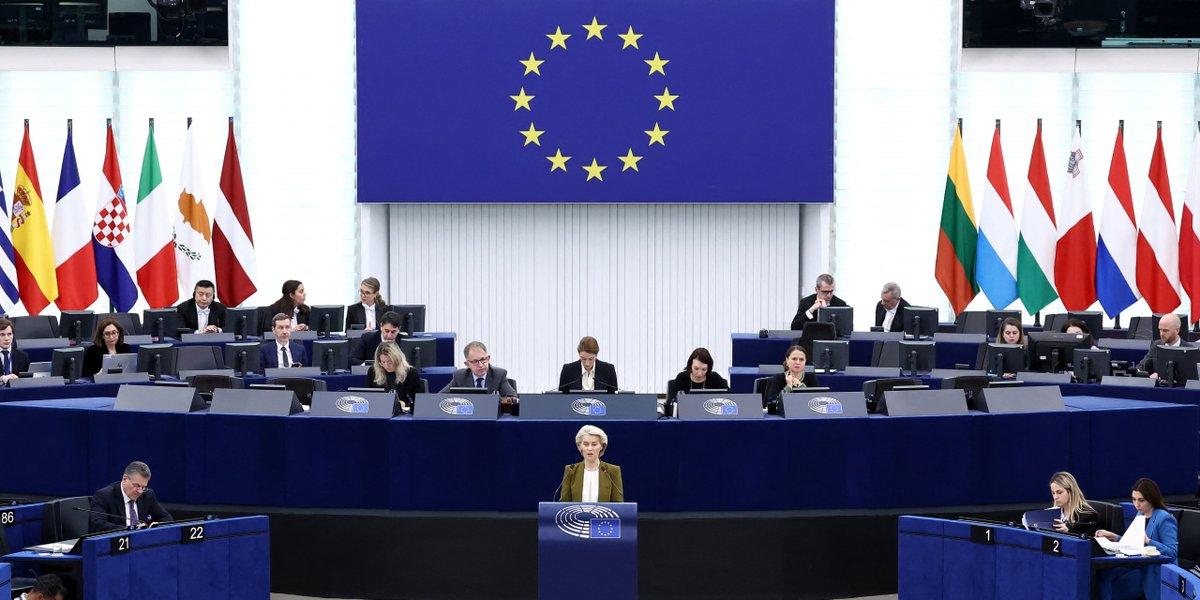
Detailed reporting on EU parliamentary process and technical aspects of trade deal. Emphasizes that this is the second postponement and explains potential tariff calculation complexities. Neutral tone with focus on procedural details. Slight emphasis on EU frustration but balanced with factual explanation.
“Bernd Lange, the committee chair, said the new temporary US tariff could mean increased levies for some EU exports and no one knew what would happen after they expire in 150 days”
“It is not clear whether Trump's new 15% tariff supersedes the deal”
Straightforward reporting on EU response to tariff developments. Provides relevant context about the trade deal terms and economic impact. Uses direct quotes from officials and neutral descriptive language. Minimal editorializing.
“The EU position is expressed in five words: "A deal is a deal," said commission spokesman Olof Gill.”
“Uncertainty around trade policy appears here to stay - putting continued pressure on the US economy”
Hong Kong-focused reporting on local business sector's confidence despite tariff uncertainty. Relatively balanced presentation of business leader perspectives suggesting limited impact. Includes criticism of Trump's actions but within context of business planning. Geographic focus provides useful but limited perspective on global story.
“President Trump's actions only undermine confidence in American investment and trade, doing nothing but harm”
“We need not be overly pessimistic. Trump is too unpredictable. We should stay calm and get prepared to adapt to changes”
Straightforward reporting on EU parliamentary suspension with relevant context about previous pause over Greenland. Uses direct quotes from key official. Minimal editorializing, though emphasizes that a "key instrument" is no longer available, implicitly supporting EU's position.
“Bernd Lange, chairman of the European Parliament's International Trade Committee, said in a statement that the Feb. 20 ruling by the Supreme Court had implications for the proposed trade deal”
“The EU has paused ratification once before, in response to Donald Trump threatening tariffs on countries that opposed the U.S. acquisition of Greenland”
Business-focused reporting emphasizing Trump's threat while providing context on trade deals and Section 122 limitations. Relatively neutral framing with focus on administration's attempts to keep deals intact. Includes relevant facts about what Trump has and hasn't done regarding other tariff authorities.
“Any Country that wants to 'play games' with the ridiculous supreme court decision... will be met with a much higher Tariff, and worse”
“Since the justices handed down their ruling on Friday, however, the administration has yet to initiate new investigations that are precursors to applying those longer-lasting duties”
Nearly identical to source_23 (likely same wire service feed). Neutral reporting focused on EU's response and seeking clarity. Uses direct quotes and factual description. No significant bias detected in framing or language choices.
“The EU position is expressed in five words: 'A deal is a deal'”
“Uncertainty around trade policy appears here to stay - putting continued pressure on the US economy”
Financial markets reporting focused on dollar and stock market movements. Describes situation as "new phase of trade war uncertainty" but otherwise uses neutral financial journalism language. Includes relevant quotes from economists and officials. Minimal editorial framing beyond market-focused analysis.
“Announcements since the Supreme Court's ruling strongly confirm that Trump has no intention of removing his 'most beautiful word' from the English dictionary”
“Uncertainty is back, and given the latest muscle-flexing by European leaders, the risk of escalation is now higher than it was a year ago”
Virtually identical to sources 23 and 08 (wire service content). Straightforward reporting on EU response with minimal editorial framing. Provides relevant context and direct quotes from officials on both sides.
“The EU position is expressed in five words: 'A deal is a deal'”
“Uncertainty around trade policy appears here to stay - putting continued pressure on the US economy”
Financial reporting focused on EU parliamentary process and legal uncertainty. Straightforward description of situation using direct quotes. Neutral framing emphasizing procedural questions rather than political conflict. Brief and factual.
“Pure tariff chaos from the US government. No one can make sense of it anymore”
“I will therefore propose to the EP-negotiating team putting legislative work on hold until we have a proper legal assessment”
Brief factual report on EU likely freezing approval process. Minimal editorializing. Provides basic context about Supreme Court ruling and Trump's response. Straightforward description of situation without heavy framing choices.
“The Supreme Court argued that Trump cannot rely on the 1977 International Emergency Economic Powers Act (IEEPA) to impose such charges”
Straightforward wire service reporting providing facts, timeline, and relevant quotes from multiple parties. Minimal framing or editorializing. Clearly explains the legal mechanisms and timeline. Includes both EU and US perspectives without favoring either.
“The decision to postpone the vote on the implementation of the U.S. deal is the right one. Given the current enormous uncertainty, a vote would be unjustifiable”
“Pure tariff chaos from the U.S. administration. No one can make sense of it anymore”
Very brief wire-style report stating EU position through quote from lead negotiator. Minimal framing beyond "seeking more details." Factual and concise without editorial spin.
“Zeljana Zovko, the lead trade negotiator in the European People's Party group on the U.S. deal, told Bloomberg in an interview that the EU has 'no other option' but to delay the approval process”
Brief factual summary describing winners and losers from tariff changes. Minimal framing or editorial content. Describes situation as "confusion" but otherwise neutral. The article is primarily data-driven rather than narrative-driven.
“The U.S. Supreme Court annulment of President Donald Trump's 'reciprocal' tariffs... have thrown world trade into a new bout of confusion”
Podcast description with minimal editorial content. Presents factual questions about policy implications. Uses neutral language to describe situation. Too brief to assess significant framing, but questions raised are substantive rather than leading.
“Shortly after the US Supreme Court ruled Donald Trump's tariffs were illegal, he hit back”
Brief segment description with minimal editorializing. Presents basic facts about market reaction and Trump's response to Supreme Court decision. Too short to contain significant framing, though phrase "lashed out" carries slight negative connotation.
“Last week, the Supreme Court struck down a set of sweeping global tariffs, a decision Mr. Trump lashed out at”
Brief financial markets report focusing on treasury yields and investor response. Minimal editorial framing. Straightforward description of market conditions and relevant background. Neutral financial journalism.
“Despite this, Trump retaliated Saturday and said he's raising global tariffs to 15% from 10%”