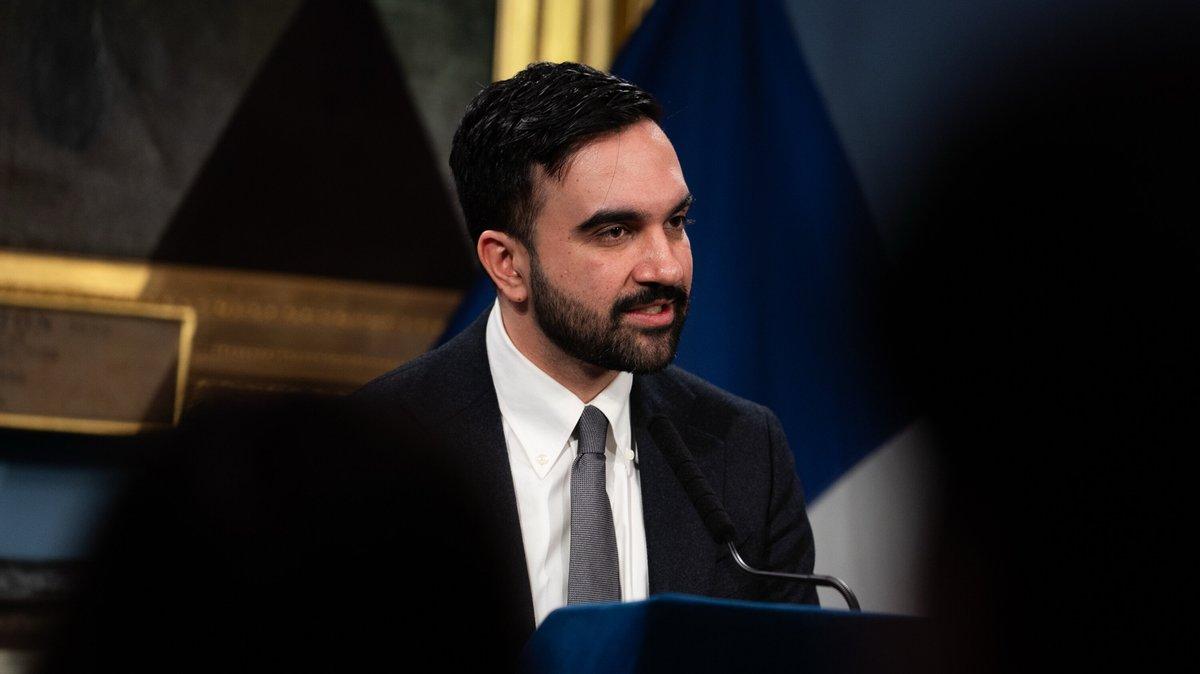
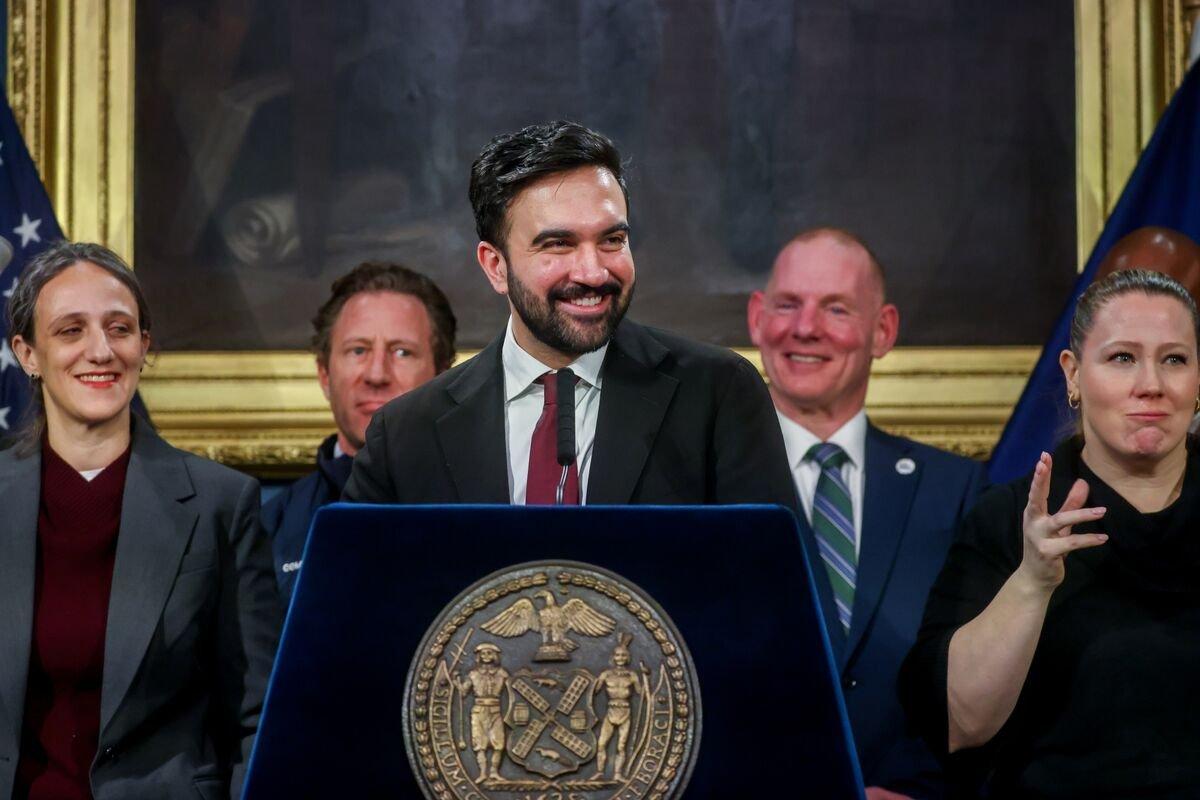
This article is not about the budget at all — it covers a separate appointment of an immigration commissioner and uses loaded language throughout ('radical,' 'cozied up to radical figures'). It uses guilt-by-association extensively, linking the appointee to CAIR and then to terrorism allegations without establishing direct wrongdoing. The framing treats past protest arrests and advocacy positions as disqualifying rather than contextualizing them.
Loaded LanguageNarrative FramingSource Selection BiasAppeal to EmotionContext Stripping
“New York City's democratic socialist Mayor Zohran Mamdani just tapped a new immigration officer to his administration who previously advocated to 'abolish ICE' and has cozied up to radical figures”
“CAIR has been accused of having ties to Hamas and the Muslim Brotherhood”
This is an opinion-style piece that uses the budget story as a launching pad for a broader anti-tax argument, comparing NYC to Portland and California. It dismisses Mamdani's fiscal concerns as pretextual, uses terms like 'socialist plans' and 'greedy Zohran,' and relies heavily on anecdote and analogy rather than NYC-specific data. The Portland preschool comparison is presented as directly analogous without establishing equivalence.
Loaded LanguageNarrative FramingAppeal to EmotionFalse EquivalenceSelective Omission
“The new socialist Muslim mayor wants to raise, by two percentage points, the city income tax rate on those who earn $1 million or more”
“Mayor Mamdani must find the money to fund his socialist plans for free bus service, government grocery stores, free preschool, and housing assistance”
This is an opinion piece opposing free bus transit that uses personal anecdote — a threatening encounter at a bus stop — as the central argument against fare-free policy. The piece conflates subway fare evasion enforcement data with bus fare policy, and presents crime statistics selectively without causal analysis. The dismissive tone toward Mamdani supporters ('Hot Girls for Zohran') signals advocacy rather than analysis.
Appeal to EmotionFalse EquivalenceLoaded LanguageSelective OmissionContext Stripping
“a fare -- even a small one -- creates a barrier to entry... Even a hurdle as small as swiping a transit card or inserting a few dollars keeps public transit from becoming a public toilet on wheels”
“That bus driver may have saved my life”
The headline and opening overstate Democratic opposition as a 'break' from Mamdani, when the opposition consists of a borough president and council speaker expressing concern about a preliminary contingency measure. The characterization of the plan as 'too radical for more centrist Democrats' is editorial opinion presented as political analysis. The article omits meaningful context about the plan's last-resort framing.
Loaded LanguageContext StrippingNarrative FramingSelective Omission
“Democratic criticism over Mamdani's plans signals a shift in the party and could reflect views that Mamdani's financial plans are too radical for more centrist Democrats”
“a nonstarter. Under no circumstance should we consider balancing our budget on the backs of working-class New Yorkers”
The headline frames the property tax as a 'threat' against the 'middle class,' leading with the most alarming interpretation rather than the contingency framing Mamdani explicitly used. The piece selectively emphasizes that Mamdani acknowledged the tax would hit middle-class New Yorkers hardest, while burying his repeated 'last resort' qualifications. Expert quotes are balanced but the overall structure steers toward alarm.
Loaded LanguageSelective OmissionNarrative FramingAnchoring
“he'll have to impose a higher tax of his own -- and it could hit middle-class New Yorkers”
“Multi-unit buildings -- where renters tend to live -- are taxed at a higher effective rate than single-family or low-density homes, where more affluent New Yorkers tend to live”
This brief article relies entirely on quotes from landlord industry representatives — a clear source selection bias. No tenant advocates, housing economists, or neutral experts are included. The framing that the hike 'would lead to rent increases' is presented as expert consensus when it reflects only the perspective of those with a financial interest in opposing the tax.
Source Selection BiasNarrative FramingSelective Omission
“Increased property taxes = a rent increase”
“Nothing says housing affordability like raising housing's largest expense. Property taxes.”
This report provides good detail on budget mechanics and the political leverage dynamic between Mamdani and Hochul. However, it frames Mamdani's strategy skeptically — 'ratcheting up pressure,' 'muscling Hochul' — while also noting his shifting deficit numbers, which is legitimate scrutiny. The characterization of Mamdani leaning on Hochul 'rather than bringing the city's fiscal house in order himself' is editorial opinion embedded in the reporting.
Loaded LanguageNarrative FramingAdversarial Neutrality
“His approach to the budget since taking office has been to lean on Hochul for more money rather than bringing the city's fiscal house in order himself”
“Mamdani had pegged the gap at $12 billion just weeks ago in another attempt to muscle Hochul, though his projection was roundly dismissed by budget experts”
This article is an interview focused on universal childcare policy, not the budget or property tax proposal. It is editorially framed from a progressive perspective — the opening asserts what 'universal childcare should look like' as a premise rather than a question. It is largely tangential to the main story cluster and provides limited budget news value.
Narrative FramingSource Selection Bias
“A universal childcare policy that ensures adequate care for all families will not means test or rely only on vouchers”
“free for all, with government taking direct responsibility for providing childcare seats”
This is a factually dense report that covers the budget history, the deficit's shifting size, and property tax mechanics clearly. It appropriately includes the Adams administration's counter-claim about reserves. The comptroller is quoted calling the property tax option 'pretty extreme,' which is presented without sufficient counterbalance to Mamdani's framing of it as a last resort. Generally reliable but slightly tilted by quote selection.
Selective OmissionSource Selection Bias
“He's put a pretty extreme option on the table, which is a combination of raising property taxes and taking money from reserves”
“The last time the city increased property tax rates was under former Mayor Michael Bloomberg in the early 2000s”
This is a brief pre-budget preview that accurately conveys the main parameters — the deficit range, the competing budget proposals, and the political dynamics with Hochul. It includes the Adams administration response and Cuomo spokesperson comment. Slight left lean in framing Mamdani's narrative about Adams and Cuomo without deeper scrutiny of his own shifting deficit figures.
Selective OmissionCollective Narrative Alignment
“The city still has a $5.5 billion budget gap, and the mayor is deeply committed to bridging it by taxing the rich”
“This crisis has a name and a chief architect. In the words of the Jackson 5, it's as easy as ABC. This is the Adams budget crisis”
This article covers a distinct but related story — Mamdani's relationship with the NYPD and surveillance technology. It is well-reported, acknowledging his evolution from 'defund' rhetoric to retaining the police commissioner. The framing is fair to both sides of the surveillance debate and correctly identifies the political tension Mamdani faces. Largely factual with minor omissions about NYPD's perspective.
Narrative FramingSelective Omission
“After previously using anti-police rhetoric, since launching his mayoral candidacy, Mamdandi has been more supportive of the NYPD”
“I am not defunding the police; I am not running to defund the police”
This is a well-rounded report that accurately conveys Mamdani's framing as a 'last resort,' includes opposition from both Hochul and City Council Democrats, and provides useful context about the Hochul-Mamdani political dynamic. The headline uses 'threatens,' which slightly overstates the adversarial framing. Overall one of the more complete accounts.
Loaded LanguageCollective Narrative Alignment
“The measure would raise an additional $14.8 billion over four years, according to budget documents”
“Ms. Hochul reiterated her commitment to New York City's fiscal well-being, but said she would oppose raising property taxes”
This is among the most factually grounded articles in the set. It accurately reports the 9.5% figure, the revenue it would generate, the scope of properties affected, and Hochul's response. It correctly notes that the city does not need state approval for property tax increases. Minor framing issue: the headline uses 'warns' which implies threat, but the body is straightforward.
Loaded Language
“Mamdani and the city council, however, don't need Hochul's approval to raise property taxes”
“That's between the City Council and the Mayor. That's their prerogative to look at that as an option”