This article frames Meyers Taylor's identity primarily through her Christian faith, patriotism, and family — quoting her religious social media posts prominently and describing her as 'outspoken Christian' and 'proud patriot.' While factually accurate, the selective emphasis on these identity markers over athletic or historical context reflects a clear ideological framing choice aimed at a conservative audience.
Selective OmissionNarrative FramingAppeal to Emotion
“She is also an outspoken Christian and shared this on Tuesday: 'The moment we prayed for. Glory to God. Forever an Olympic Champion.'”
“She is a proud wife, mother, and American.”
This piece leads with the flag and sign language celebration, emphasizing patriotic and emotional elements. It sources facts through named third-party outlets and maintains accuracy, but selectively foregrounds the disability angle and American identity framing. The headline's use of 'Honorably Freaks Out' is informal and celebratory rather than neutral, reflecting an editorial tilt toward enthusiastic patriotic coverage.
Appeal to EmotionLoaded LanguageNarrative Framing
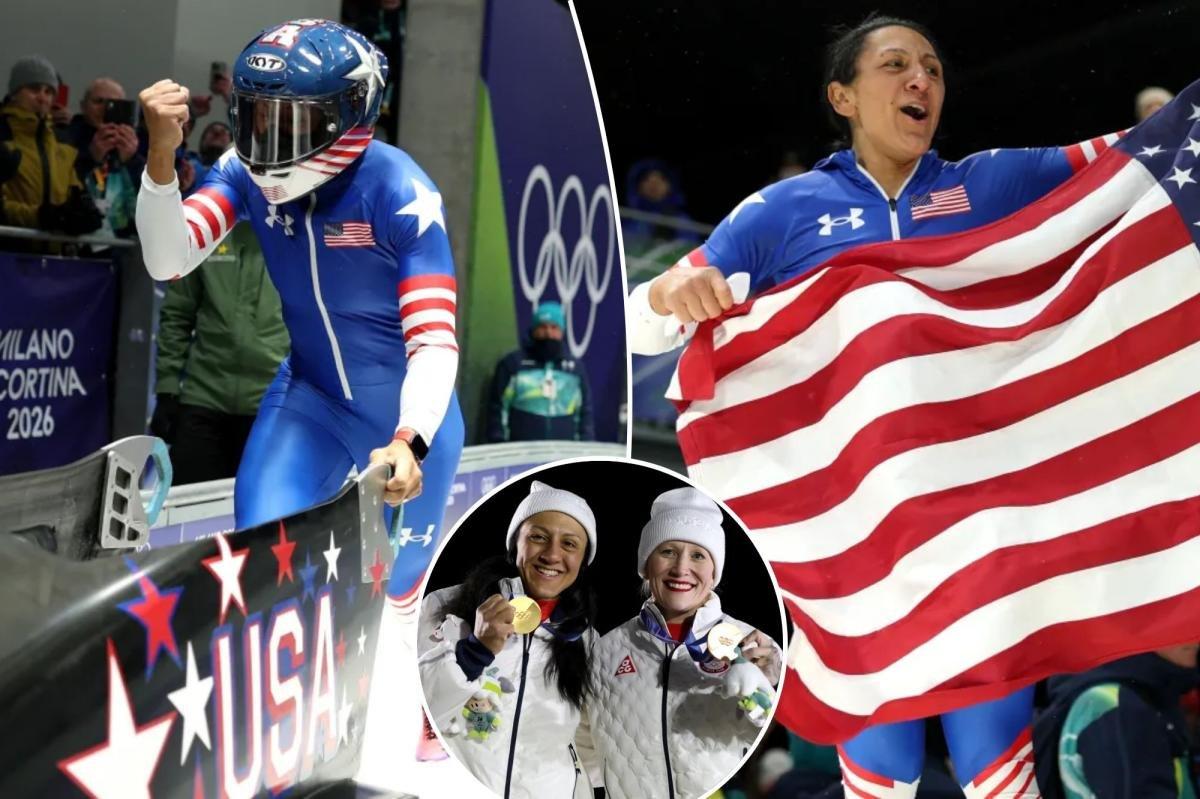
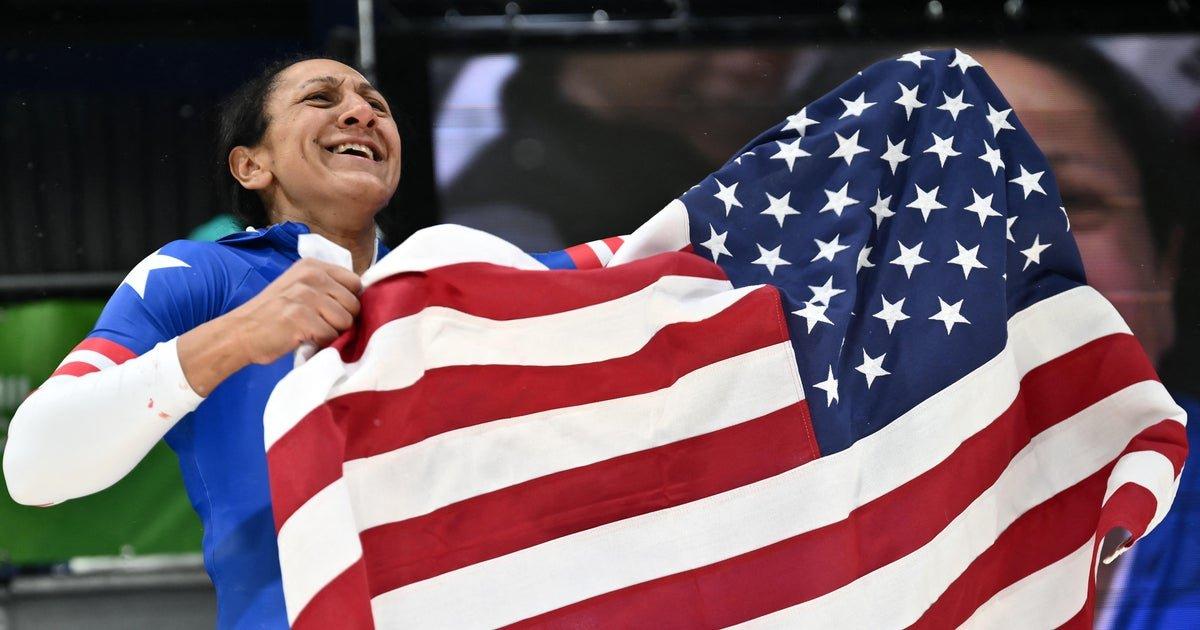
“Elana Meyers Taylor jumped from her sled in celebration, held up the American flag and shared the news with her two deaf sons through sign language.”
“'You get a lot of people that like to write you off as soon as you reach 40,' Humphries told CBS Sports.”
This is an explicitly advocacy-framed piece using Olympic sports as a vehicle for commentary on working motherhood and societal expectations of women. Phrases like 'The standards for any woman are impossible' and 'badass women' are editorial characterizations rather than reporting. The framing is emotionally resonant and the underlying facts are accurate, but the piece functions as commentary rather than news reporting.
Appeal to EmotionNarrative FramingLoaded Language
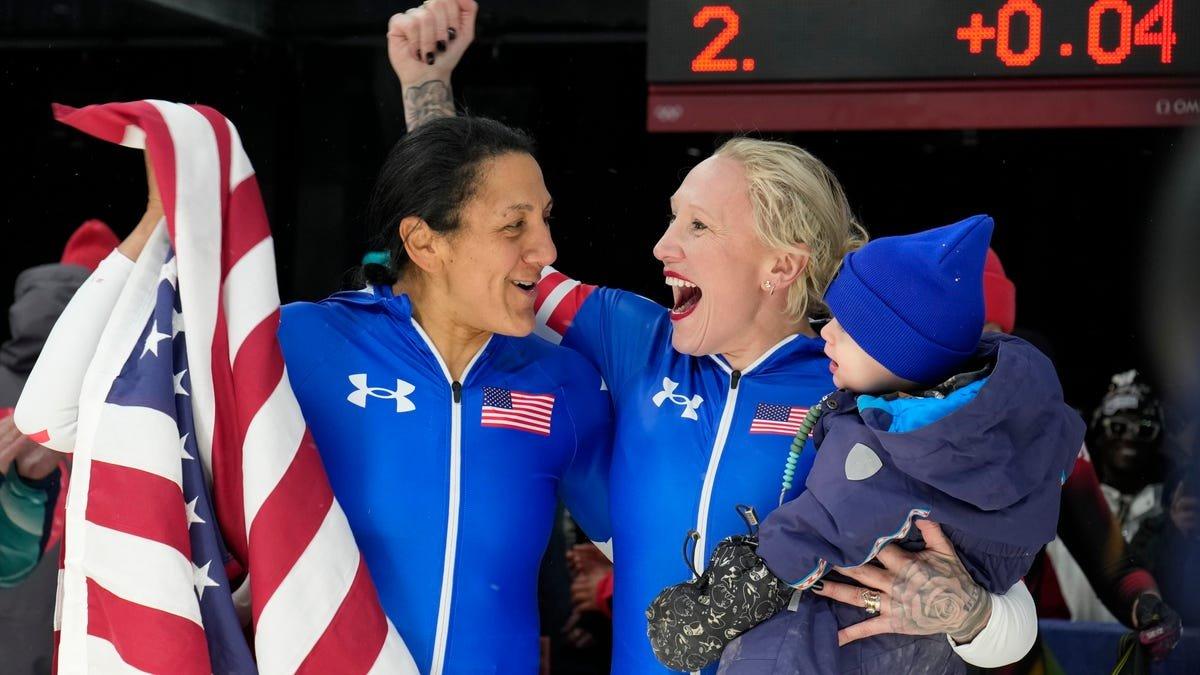
“The standards for any woman are impossible. Add a family, in whatever fashion it is, and it gets exponentially more difficult.”
“It doesn't matter if they are chasing Olympic medals or just trying to get through the day. These two badass women understand and empathize with the struggles because they face them, too.”
This piece provides strong historical context — noting Meyers Taylor's role in getting women's monobob added to the Olympic program and her advocacy work — that most other articles omit entirely. It frames her win through the lens of advocacy for Black athletes, mothers, and disability communities. The subtitle, treating these as the primary lens, reflects a progressive framing but one grounded in verifiable facts about her actual advocacy work.
Narrative FramingSource Selection Bias
“She had competed with and against men on the World Cup tour and at the world championships to help force women's monobob into the Winter Olympic program.”
“The hardest mental battle is just the day to day with my kids and trying to figure out how to make this all work.”
This piece foregrounds the motherhood angle from the headline ('Two U.S. moms in their 40s') and provides the most detail about Humphries' postpartum return and endometriosis treatment. It includes useful context about the two athletes' roles in getting women's monobob added to the Olympics. The framing consistently emphasizes gender barriers and maternal identity as the primary lens, which is accurate but selective.
Narrative FramingSelective OmissionAppeal to Emotion
“The two women are also widely credited with helping convince the International Olympic Committee to add the women's monobob event to the Winter Games”
“It's been quite a bit on my body, said Meyers Taylor, citing years of breastfeeding, lack of sleep, back pain, and getting older.”
This longform piece takes a self-aware, meta approach — explicitly critiquing the 'inspirational athlete' NBC narrative template before arguing Meyers Taylor genuinely transcends it. It provides the most substantive structural context of any article, including the GoFundMe failure and U.S. bobsled funding crisis. Word choices like 'inhospitable to Black athletes' reflect a mild progressive framing lens.
Narrative FramingLoaded Language
“If everybody's inspirational, then nobody's inspirational. Oh, look, another 23-year-old who has to wake up early to practice. Big damn deal.”
“When I say there's no money in bobsledding, it's not an exaggeration.”
This contributor-style piece reads as a personal tribute from someone who has followed Meyers Taylor's career, disclosed upfront. It uses celebratory language ('PERFECT final run') and frames the win in explicitly inspirational terms, but all factual claims are accurate and well-contextualized. The disclosure of prior coverage of the subject is a transparency positive, though it signals advocacy rather than independent reporting.
Appeal to EmotionNarrative Framing
“With a PERFECT final run -- aggressive, yet technically exceptional -- she crossed the finish line”
“experience matters. And resilience (born from both victory and heartbreak) matters as much as physical ability.”
This article uses Meyers Taylor's win as a brief hook for a broader argument about moving NBA basketball to the Winter Olympics window. The reporting on her win is factually accurate and neutral, and the NBA proposal segment is clearly framed as one commentator's opinion rather than institutional advocacy. Fairly balanced throughout.
Narrative Framing
“The Winter Olympics lack the buzz that the summer does”
“The NHL's decision to pause its regular season for the 2026 Winter Games has shown how much attention a sport can bring to the Olympics when its top stars are front and center.”
This narrative-driven piece uses the '41 years hunting gold' framing effectively while staying largely factual. It traces Meyers Taylor's full Olympic career chronologically and includes the near-misses with specific time margins. The headline's 'won it in a single minute' construction is slightly misleading — the gold was won across four cumulative heats — but the article body corrects this accurately.
Narrative FramingLoaded Language
“Across four Olympics, Elana Meyers Taylor had come as close as humanly possible to Olympic gold without winning it.”
“Then, in one thrilling minute on Monday night, her lifetime wait was suddenly over.”
This is a brief, fact-forward summary piece with no significant analytical framing. It covers the key facts efficiently including Meyers Taylor's pathway from failed softball tryout to bobsled. The comparison to Lindsey Vonn's injury at the end feels like a non-sequitur addition that slightly disrupts the narrative but does not introduce bias. Minor inaccuracy: describes it as a '20-year search' when her first Olympic appearance was 2010 (16 years).
Appeal to Emotion
“She was spotted dropping to her knees in tears in triumph as German Laura Nolte, 27, finished her run to claim silver.”
“Her success follows Lindsey Vonn, 41, missing out on a medal after breaking her leg during the women's downhill alpine skiing event.”
This is a clean, factually accurate news report covering the key records and quotes efficiently. It notes Meyers Taylor is 'the first mother to win Olympic bobsleigh gold' — a distinction not prominently featured in other articles — and covers her empowerment messaging. Tone is straightforward with minimal loaded language.
“Finally the gold! It took long enough, right?”
“Victory makes her the most decorated female bobsleigh pilot of all time as well as the first mother to win Olympic bobsleigh gold.”
This is a concise, factually accurate summary that covers the key records, quotes, and biographical context. It correctly notes Meyers Taylor originally had Olympic ambitions in football (not softball as some articles state), citing a direct quote from the athlete. Neutral tone throughout with no significant framing choices. The CBS News byline disclosure at the top is notable but the article itself is evaluated on content alone.
“I love going fast and I love being able to control this thing that should be out of control, that should be uncontrollable”
“She's also an advocate for children who have disabilities.”
This is among the most comprehensive and well-sourced accounts, detailing the near-quit moment in Norway, the Spurs player's intervention, O'Brien's background, and the season's poor results. It maintains a neutral, factual tone throughout and provides context that most other articles omit, including the St. Moritz crash. Minor editorializing appears only in the lede framing ('on the brink of quitting').
Appeal to Emotion
“Her body was failing, her performance was dismal, and she questioned whether she was doing right by her family.”
“She finished tenth in the World Cup monobob standings, with an average tenth-place finish, and a disappointing 19th at Cortina in November, 2.43 seconds behind the winner.”
This is among the most factually detailed articles, providing Meyers Taylor's complete medal history with named teammates for each Olympics, her father's background, and her concussion history — context absent from most other pieces. It maintains a neutral tone and includes competitive detail (Nolte's final heat loss of 0.19 seconds) that helps readers understand the mechanics of the win. Minimal framing bias detected.
“I thought it was impossible. I didn't need it, but I wanted it.”
“To have my name up there with Bonnie Blair, it doesn't even make sense to me.”
Near-identical to another wire report in the set, this article presents the story with factual accuracy, includes the critical context of Meyers Taylor's poor pre-Olympic season results, and quotes multiple subjects proportionally. It is straightforward reporting with minimal framing choices, though the warm closing anecdotes about her sons are mildly appeal-to-emotion territory.
Appeal to Emotion
“'I didn't get it on video because he wasn't wearing pants, of course, because what toddler wants to wear pants?'”
“Her results this season didn't exactly make it seem likely.”
This wire-style report is the most factually dense and structurally neutral of all articles, presenting the near-quit narrative, competitive context, poor pre-Olympic results, and the Spurs connection with minimal editorializing. It includes direct quotes proportionally from multiple perspectives and places the win in honest statistical context. Closest to pure straight news reporting in the set.
“She was 10th in the World Cup monobob standings; eight women won medals on the circuit this winter and she wasn't one of them.”
“Without that gift, who knows what would have happened.”
This wire sports report focuses efficiently on the two-woman event setup using Meyers Taylor's monobob gold as context. It includes rare details about the St. Moritz crash, O'Brien's rapid transition from track to bobsled, and Germany's competitive strength — providing genuine forward-looking context most other articles lack. Tone is professional and neutral throughout.
“I finished my last track meet August 2nd and started training for bobsled August 4th.”
“It was not easy getting back on the line to race in St. Moritz after that.”