This conservative outlet not only mentions Duvall's conservative politics but includes a provocative quote criticizing feminists and Bill Clinton: 'What a double standard. They witter on about having the vote and then elect a guy like Clinton because he's good-looking and puts through women-friendly policies.' No other outlet includes this quote, which appears designed to appeal to conservative readers' grievances. The article positions him as 'openly conservative' and emphasizes his Republican campaign work prominently.
Selective OmissionSource Selection BiasNarrative Framing
“He was also known for being openly conservative and campaigned for several Republicans including John McCain and Rudy Giuliani.”
“What a double standard. They witter on about having the vote and then elect a guy like Clinton because he's good-looking and puts through women-friendly policies.”
This conservative outlet front-loads Duvall's conservative politics in a way no other source does, stating in the third paragraph 'Although he tried to keep his distance from politics in recent years, Duvall was well-known in Hollywood for his conservative views.' The article emphasizes his Republican identity ('lifelong Republican'), mentions the National Medal of Arts from Bush, and notes Senator Fetterman's cameo in his final film—an unusual detail to include. The framing positions Duvall as a conservative figure first, actor second.
Narrative FramingAnchoringSelective Omission
“Although he tried to keep his distance from politics in more recent years, Duvall was well-known in Hollywood for his conservative views. A lifelong Republican, he was awarded a National Medal of Arts by former President George W. Bush in 2005.”
This outlet explicitly identifies Duvall as 'a longtime fixture in conservative circles' and details his Republican activism (Bush inauguration, RNC video narration) before noting his 2014 shift to independent status. It also emphasizes his faith-based filmmaking motivations for The Apostle and his charitable work. While factually accurate, the framing priorities—leading with political identity and faith—reflect conservative audience interests. The article's structure treats his conservatism as central to understanding his legacy.
Narrative FramingSource Selection Bias
“A longtime fixture in conservative circles, Duvall was also a prominent supporter of the Bush administration and famously narrated the 'Country First' tribute video for the 2008 Republican National Convention.”
“He also made the movie to counter Hollywood's typical depiction of preachers as hypocrites”
This conservative outlet front-loads Duvall's military family background ('Navy brat,' father was rear admiral, connection to Robert E. Lee) and his Republican politics. The article explicitly states 'A lifelong Republican' and details his conservative activism (Bush Medal of Arts, attending Bush inauguration, supporting Giuliani and McCain/Palin). The framing emphasizes his military heritage and political identity as central to understanding him, reflecting conservative audience priorities.
Narrative FramingAnchoringSelective Omission
“Duvall was born in San Diego, California to parents Mildred and Rear Admiral William Howard Duvall. His mother was a relative of Civil War General Robert E. Lee”
“A lifelong Republican, he was awarded a National Medal of Arts by George W. Bush in 2005. Duvall attended Bush's inauguration in 2001”
This conservative outlet front-loads opinion language ('Expansive Actor' in headline), includes editorial flourishes about religious imagery ('the Great Director called'), and emphasizes Duvall's apolitical private life ('I don't recall any political takes, scandals, or Hollywood weirdness'). The framing subtly celebrates him as an exception to liberal Hollywood—a 'serviceable actor who loved his craft' rather than a celebrity activist. Emphasis on Virginia residence and country music roles aligns with conservative cultural values.
Loaded LanguageNarrative FramingSelective Omission
“Every Robert Duvall performance is an unexpected one. Unlike many actors who have had the length of a career as long as his, his performances are unique and nuanced, diverse and always revelatory.”
“As a regular media watcher and writer, all I can recall of Robert Duvall is his remarkable performances in his lengthy filmography. I don't recall any political takes, scandals, or Hollywood weirdness.”
This conservative outlet employs reverent, almost hagiographic language ('didn't belong to any era,' 'no seams,' 'greatest actors'). Notable for explicitly mentioning Duvall's faith ('He was a quiet believer in an industry full of loud ones') and including his quote about 'shouting at God'—emphasizing religious identity in a way most outlets avoid. The focus on his distaste for Hollywood ('Being a star is an agent's dream, not an actor's') frames him as authentically American rather than Hollywood elite.
Loaded LanguageNarrative FramingSelective Omission
“He was a quiet believer in an industry full of loud ones. 'There was nothing wrong with shouting at God,' he said.”
“The feeling was that Bobby was the new Brando. I felt he was the one, and probably I wasn't.”
This conservative outlet emphasizes Duvall's wife's touching personal statement and Randy Quaid's anecdote about Duvall confronting director Tony Scott—framing him as a strong, uncompromising figure. The headline format ('Lead Tributes') and focus on specific conservative-adjacent figures (Quaid, Piers Morgan) alongside mainstream celebrities reflects editorial choices about whose tributes matter most. Brief, respectful tone without excessive sentimentality.
Source Selection BiasNarrative Framing
“Now that Tony and Robert are both departed to heaven and I hope laughing together I have never seen an actor rip a director a new asshole quite like Duvall did on Days of Thunder”
“To the world, he was an Academy Award-winning actor, a director, a storyteller. To me, he was simply everything.”
UK progressive outlet provides career appreciation with critical analysis. The language includes more interpretive characterization than most outlets ('foghorn-voiced bull of pure American virility,' 'Roman emperor from Waxahachie'). The article emphasizes his 'tenderness and woundedness' alongside his toughness, reflecting progressive interest in emotional complexity. The extended analysis of his Godfather and Apocalypse Now performances shows genuine film criticism rather than obituary formula. Slight editorial voice but largely balanced.
Loaded LanguageNarrative Framing
“Robert Duvall was a foghorn-voiced bull of pure American virility, and he put energy and heart into the movies for more than 60 years.”
“On the other hand, Duvall's Hagen in The Godfather is one of his subtlest and most misunderstood performances.”
This outlet emphasizes the timing angle—'just weeks before death'—which creates mild dramatic framing. The focus on his 95th birthday video and childhood memories adds human interest but verges on sentimentality. The article is brief and factual otherwise, but the headline's emphasis on proximity to death is slightly sensationalized.
Appeal to EmotionNarrative Framing
“Luciana surprised me with this wonderful birthday video in preparation for tomorrow's big 95! Thank you all for the support all of these years”
This international tabloid-style outlet uses more colorful language ('Navy brat who became Hollywood royalty,' 'foghorn-voiced bull') and emphasizes his military lineage and connection to historical figures (Robert E. Lee, Harry Truman, Dick Cheney, Barack Obama). The tone is more personality-driven than other outlets, with anecdotes about wild parties and Hoffman's quote about sexual obsession. Slight sensationalism but largely factual.
Loaded LanguageAppeal to Emotion
“He was the nearest America comes to royalty. A descendant of one of the nation's first settlers and famed Civil War General Robert E Lee”
“We were obsessed with sex. I'd get lucky and have a girl sleep over. We'd be in the shower the next morning, and Bobby'd take his clothes off and just jump in the f@@@@@g shower”
Major cable news network provides comprehensive career overview. The article is largely factual but notably includes two paragraphs at the end about Duvall's Republican politics and support for conservative candidates—context most other mainstream outlets completely omit. While factual, the placement at the end suggests the outlet considered this information relevant but secondary to his acting career. Slight editorial decision to include political context without making it central.
Selective Omission
“Duvall had a history of supporting Republican candidates, attending George W. Bush's inauguration, and raising money for Mitt Romney's candidacy and narrating a video at the Republican National Convention”
This article emphasizes Duvall's final social media messages, creating mild sentimentality through the 'Sweet Message' framing in the headline and focus on his birthday video and Thanksgiving greeting. The approach is emotionally engaging but not manipulative—it provides genuine personal details (his recent 95th birthday, his posts about film projects) that humanize the story. Slightly elevated emotional framing but remains factual.
Appeal to Emotion
“To all my fans, have a happy happy Thanksgiving and a great year coming up. God bless.”
“Had he turned in my direction, I wouldn't be here today! I absolutely enjoyed working on this film”
Public radio outlet provides thoughtful career retrospection with emphasis on his artistic approach and technique. The article includes extended analysis of his acting philosophy and quotes from interviews explaining his craft. The focus on his 'compassionate center' and ability to bring 'kindness and concern' even to tough-guy roles reflects slight progressive framing that emphasizes emotional depth over masculinity. Generally balanced with minor lean.
Loaded Language
“Basically just talk and listen, and keep it simple. And however it goes, it goes.”
“His strength as an actor was always how unforced he seemed, how true. Others around him emoted, showily and outwardly -- he always directed his energy inward, to find a character's heart.”
This article reprints Duvall's final USA TODAY interview from 2021, providing his own words about his career, favorite roles, and philosophy. The framing device ('final interview') adds mild sentimentality but the content is his unfiltered perspective. The article serves as both obituary and archival record, allowing Duvall to speak for himself rather than being characterized by others.
Appeal to Emotion
“It always comes back to 'The Godfather.' The first ones are two of the best films ever made. About a quarter of the way into it, we knew we had something special.”
“The Western is our genre in the United States of America. The English have Shakespeare, the French have Molière, the Russians have Chekhov, but we have the Western.”
Straightforward reporting focused on celebrity tributes. The article structures itself around social media reactions from Adam Sandler, Alec Baldwin, and others, providing direct quotes without editorial characterization. Minimal framing beyond factual recitation of tributes and career highlights. The focus on celebrity responses is standard entertainment journalism, not bias.
“Funny as hell. Strong as hell. One of the greatest actors we ever had. Such a great man to talk to and laugh with.”
“He was -- irascible is the word I would use -- he was very crusty, but he was a gentleman.”
Major newspaper provides comprehensive biographical obituary with career chronology and personal details. The article includes useful context about his roommate years with Hoffman and Hackman, including Hoffman's frank quote about their sexual obsession. The language is professional and balanced. The focus on his range and versatility ('chameleon of the silver screen') reflects genuine critical consensus.
“We were obsessed with sex. I'd get lucky and have a girl sleep over. We'd be in the shower the next morning, and Bobby'd take his clothes off and just jump in the f@@@@@g shower”
“One of the most resourceful, most technically proficient, most remarkable actors in America”
Straightforward international reporting aggregating Hollywood tributes. The article follows standard obituary format: announcement, wife's statement, celebrity reactions with direct quotes, career summary. No editorial characterization or framing beyond factual presentation. The focus on tributes is standard entertainment journalism practice.
“Funny as hell. Strong as hell. One of the greatest actors we ever had. Such a great man to talk to and laugh with.”
“One of the best ever. An actor's actor. Brilliant. Genius. Mesmerized in every role.”
Major news network provides comprehensive career obituary with biographical details. The language is professional and balanced. The article includes his family's statement about not wanting a formal service and encouraging fans to honor him by watching films—a touching detail most outlets omit. Straightforward reporting without spin.
“He did not want a formal service, so Duvall's family encouraged fans to honor his memory by 'watching a great film, telling a good story around a table with friends'”
“He fully inhabited each character, whether portraying a ruthless TV executive or a passionate Pentecostal preacher”
Progressive outlet provides straightforward obituary with career highlights and social media tributes. The article includes his complete filmography context and mentions his influence on 'generations of actors.' The language is respectful without excessive sentimentality. Minimal framing beyond standard obituary structure.
“one of Hollywood's most celebrated actors whose seven‑decade career included unforgettable performances”
“his legacy as one of Hollywood's great performers is firmly cemented in the films that continue to inspire and resonate across generations”
Major broadcast network provides comprehensive obituary with career overview, major roles, and critical assessment. The article includes useful context about his acting philosophy ('It's you underneath') and his approach to characters. Language is professional and balanced. The emphasis on his 'understated performances' and ability to 'subsume himself into characters' reflects genuine critical consensus, not spin.
“Has to be. It's you underneath. You interpret somebody. You try to let it come from yourself.”
“One of the best actors of his generation with a career spanning nearly seven decades, Duvall was noted for his understated performances”
Entertainment trade publication provides standard career obituary with chronology and major roles. The language is professional and factual. The article includes useful industry context about his transition from character actor to leading man and his later career choices. Minimal framing beyond standard trade journalism.
“Duvall's gruff naturalism came to define the acting style of a generation that included Robert De Niro, Dustin Hoffman and Gene Hackman”
“at a certain point, it's 'hard to say the difference between leading men and great character actors.'”
Standard trade publication obituary with career chronology, major roles, and awards. The language is professional and factual. The article includes personal details (four marriages, passion for tango and Argentina) without sensationalism. Straightforward entertainment industry reporting with minimal framing.
“Oscar winner Robert Duvall, a versatile actor who made lasting impressions in a range of parts from starring to supporting roles”
This business/entertainment outlet delivers standard obituary coverage: career highlights, major roles, awards, biographical details. The language is professional and factual. The focus on his extensive filmography and honors (including the National Medal of Arts from Bush) is appropriate context without political framing. No spin detected.
“Over a long career, actor Robert Duvall brought a wide range of characters to life, from tough Marines to wistful, tender-hearted cowboys.”
Brief, straightforward entertainment news reporting aggregating social media tributes. No editorializing, minimal framing. The article simply compiles reactions from various celebrities across platforms (X, Threads, Instagram) with direct quotes. This is standard celebrity death coverage—factual compilation without interpretation.
“I had the honor of working alongside Robert Duvall. I was in awe.”
“The privilege of getting to work with this man, to know this man, is still the most important experience of my life.”
International outlet provides concise obituary focusing on his two most iconic roles (The Godfather, Apocalypse Now) and Oscar win. The language is restrained and factual ('Blunt-talking, prolific and glitz-averse'). Brief format limits editorial choices, but what's present shows no spin.
“Blunt-talking, prolific and glitz-averse, Duvall won an Oscar for best actor and was nominated six other times.”
“His passion for his craft was matched only by his deep love for characters, a great meal, and holding court.”
Major newspaper provides comprehensive career obituary with thoughtful analysis of his acting style and major roles. The language is professional and balanced ('commanding and supremely versatile actor'). The article includes useful biographical context and career chronology without editorializing. Straightforward quality journalism.
“He fully inhabited each character, whether portraying a ruthless TV executive in 'Network' (1976) or a passionate Pentecostal preacher in 'The Apostle' (1997).”
“one of the most resourceful, most technically proficient, most remarkable actors in America”
International outlet provides straightforward career overview with emphasis on his most iconic roles. The language is neutral and factual. Brief mention of his personal life (four marriages, passion for Argentina and tango) adds human interest without sensationalism. Solid, unspun reporting.
“For each of his many roles, Bob gave everything to his characters and to the truth of the human spirit they represented.”
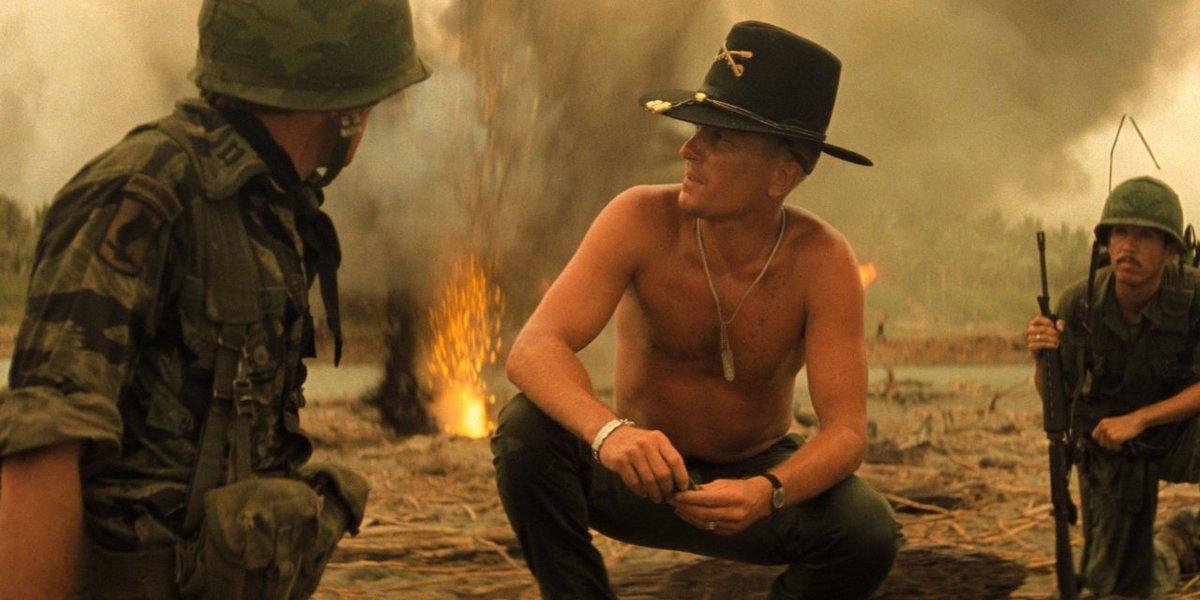
“I love the smell of napalm in the morning. ... It smells like ... victory.”
Wire service provides standard obituary format: wife's statement, career highlights, major roles, filmography. The language is neutral and professional. The article includes his complete career arc from 1960s TV to final 2022 film. No editorializing or framing beyond factual presentation.
“His passion for craft was matched only by his deep love for characters, a great meal, and holding court.”
This international outlet provides concise, factual career overview without editorializing. The language is restrained and professional ('distinguished and prolific,' 'brooding intensity'). Incomplete text limits full assessment, but what's present shows straightforward biographical reporting without spin or excessive characterization.
“Robert Duvall was a distinguished and prolific screen actor who lent a brooding intensity and grizzled authority to seven decades of American film-making.”
Entertainment trade outlet provides minimal obituary with basic facts and his wife's statement. The brevity limits assessment, but the language is straightforward and factual without editorial characterization. Standard industry reporting.
“Bob passed away peacefully at home, surrounded by love and comfort.”
“To the world, he was an Academy Award-winning actor, a director, a storyteller. To me, he was simply everything.”
International wire service provides standard obituary with career chronology and major roles. The language is neutral and professional. The article includes useful personal details (his connection to Argentina, his farm in Virginia, his passion for tango) without sensationalism. Straightforward, unspun reporting typical of wire services.
“Oscar winner Robert Duvall, a versatile actor who made lasting impressions in a range of parts”
“For each of his many roles, Bob gave everything to his characters and to the truth of the human spirit they represented”
This brief excerpt from what appears to be international coverage provides minimal framing—just stating the basic facts about his career span and iconic roles. The language is restrained and factual. Incomplete text makes full assessment difficult, but what's present shows no spin.
“For two good decades in American cinema - arguably the two very best - it seemed illegal to make a great film without Robert Duvall.”